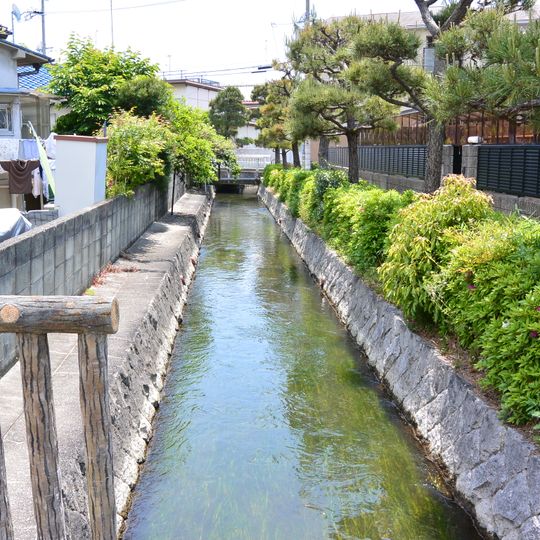
Koyayu, Irrigation canal in Takarazuka and Itami, Japan
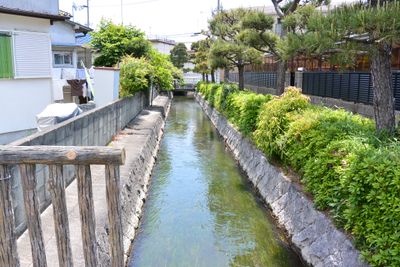
Koyayu is an irrigation canal that extends for three kilometers through agricultural land and connects with the Muko River. The facility distributes water across multiple farm areas and is supported by modern technical structures such as the Kuji cylindrical water splitter built in 1941.
Canal construction began in 1597 under Tokugawa Ieyasu and was completed in 1611, marking a major advance in water management. The water distribution system with its siphon structure has remained in operation for centuries.
The Nikaryo section takes its name from two areas it flows through: the Kawasaki and Inage districts. The irrigation system shows how farmers have shared water and supplied their fields for centuries.
The canal is best explored on foot by walking along the banks and observing the various technical structures in place. The best time to visit is during the growing season when the surrounding agricultural land is actively farmed.
The Kuji water distribution device operates on a siphon principle that had proven effective long before its official recognition as cultural property in 1998. This simple yet sophisticated system shows how engineers used hydraulics in the 17th century to ensure fair water sharing between farmers.
The community of curious travelers
AroundUs brings together thousands of curated places, local tips, and hidden gems, enriched daily by 90,757 contributors worldwide.