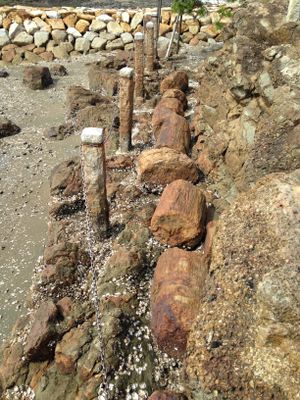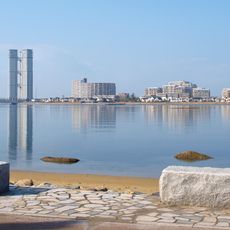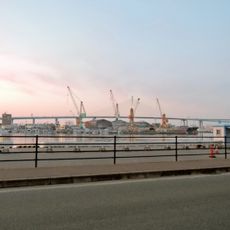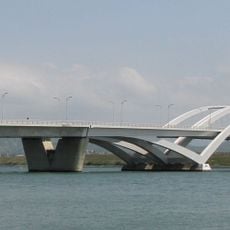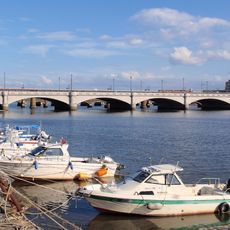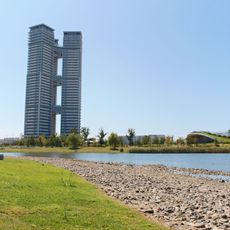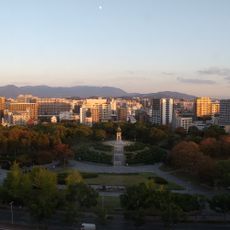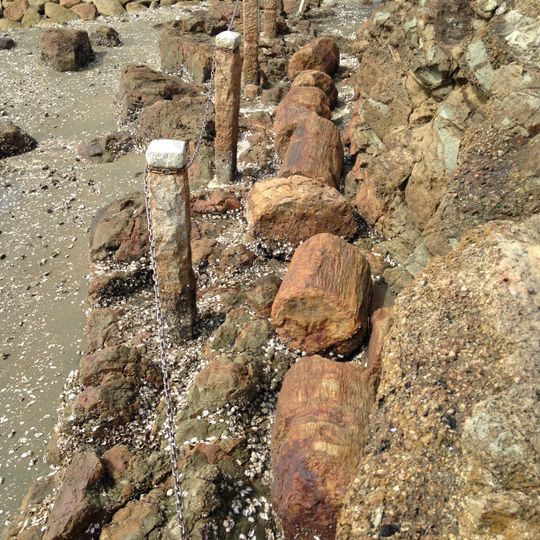
Hobashiraishi Stones in Najima, Petrified wood formations in Hakata Bay, Japan.
The Hobashiraishi Stones are mineral formations along Hakata Bay that developed from ancient fossilized trees. These upright structures display petrified patterns and textures throughout, documenting the transformation of organic material into stone over millions of years.
These geological formations developed approximately 35 million years ago, when mineral-rich water gradually replaced the organic material of ancient trees. The petrification process reveals how Hakata Bay has changed across geological timescales and how coastal landscapes are shaped through slow mineral processes.
The name Hobashiraishi refers to the upright shape of these stones, which resemble ship masts rising from the water. You can see these vertical formations along the coastline and understand why local sailors and fishermen gave them this name.
The stones are accessible year-round and accompanied by multilingual information signs that help visitors understand the geological processes. A visit works well in any season, though coastal conditions look different at high tide and low tide.
Scientists use these stones to study tsunami patterns and changes in the region's coastal geology. The formations serve as natural archives of ancient marine life and climate conditions from a distant geological past.
The community of curious travelers
AroundUs brings together thousands of curated places, local tips, and hidden gems, enriched daily by 92,340 contributors worldwide.