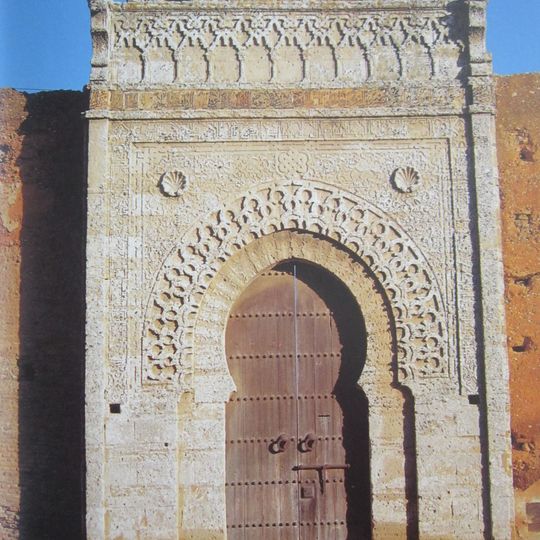
Zawiya en-Noussak, Religious complex and residence
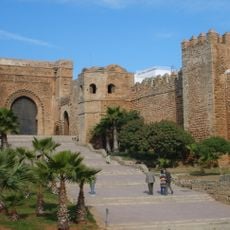
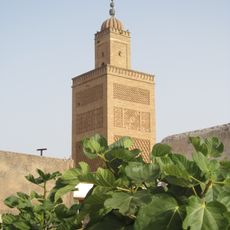
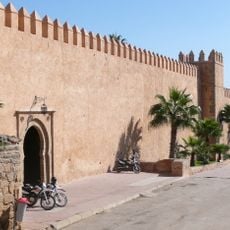
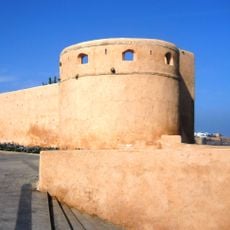
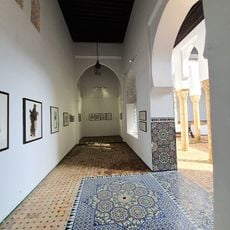
Zawiya en-Noussak is a religious structure in Salé, Morocco, built with thick stone walls and rammed earth construction, located just outside the old city walls. The building had a rectangular layout approximately 115 by 88 feet with a central courtyard, fountains, and surrounding rooms decorated with colorful tiles and carved plaster.
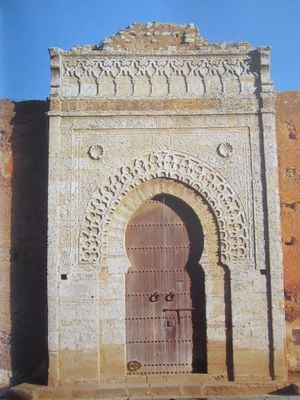
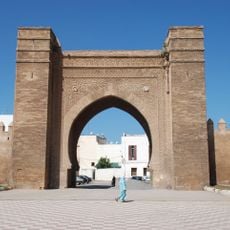
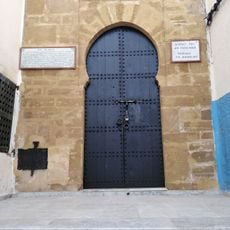
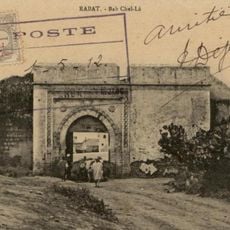
The building was constructed in 1356 and served Sufis for Qur'anic study and prayer without being tied to saint veneration or a specific Sufi order. In the 20th century, an unrecorded fire caused severe damage, and its southwest entrance portal collapsed in 1912, though the distinctive main gate has survived to the present day.
The zawiya takes its name from a nearby saint's tomb that drew visitors and gave the site an alternative name. It served as a meeting place for Sufis who studied the Qur'an and prayed together, while also welcoming travelers seeking shelter, merging spiritual practice with practical hospitality.
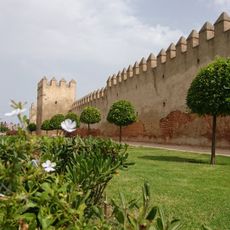
The site is located near the old city walls of Salé and is easily accessible on foot when exploring the historic area. Visitors should dress modestly and remove their shoes before entering prayer spaces to respect the religious nature of the place.
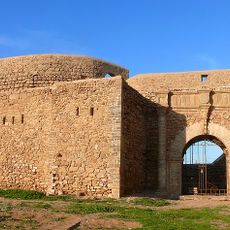
The most notable feature is the main entrance portal with its carved patterns, arabesques, and Qur'anic verses in Arabic script, standing as one of the few surviving original elements. This gate was even documented as a separate archaeological feature, showcasing the refined craftsmanship of the 14th century.
The community of curious travelers
AroundUs brings together thousands of curated places, local tips, and hidden gems, enriched daily by 92,020 contributors worldwide.