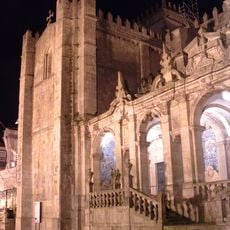
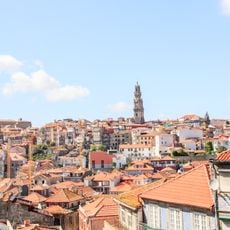
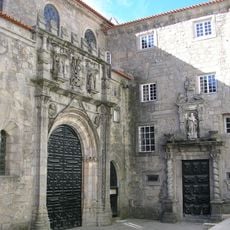
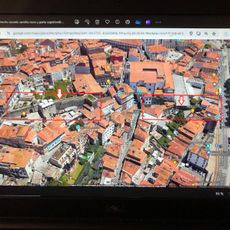
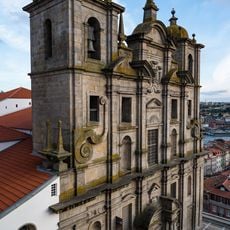
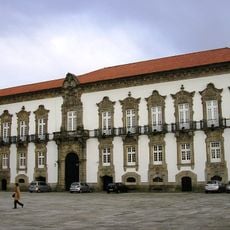
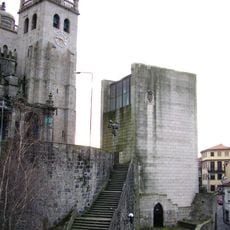
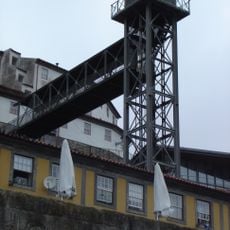
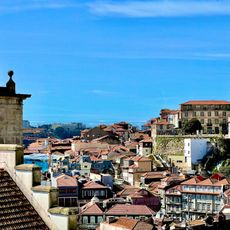
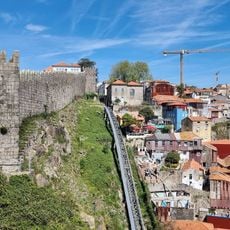
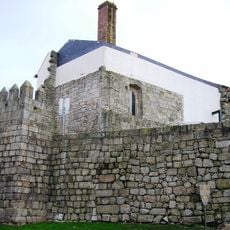
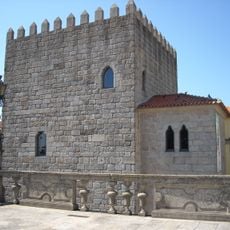
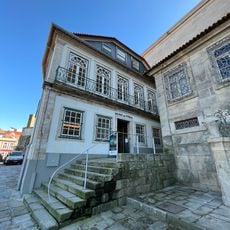
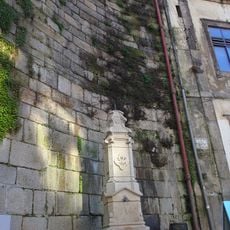
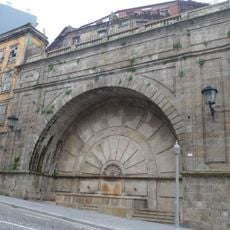
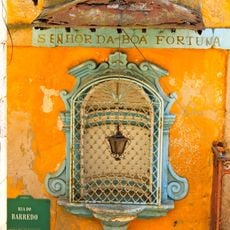
City walls of Porto, Medieval fortification in Historic Centre, Portugal.
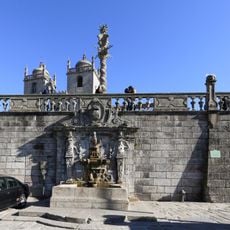
The City walls of Porto comprise two circuits: the Roman-era Primitive Wall, a 750-metre perimeter enclosing 4 hectares on the Pena Ventosa hill around the cathedral, and the 14th-century Fernandine Wall, begun in 1336 under Afonso IV and finished under Fernando I. The Fernandine circuit had battlements, square towers and several gates, including the Porta de Vandoma on today's Rua Chã, demolished in 1855.
The Fernandine walls were begun in 1336 under Afonso IV and finished in 1374 or 1376 under Fernando, after the Crown moved the city's jurisdiction from the bishop in 1405 and the Rua Nova opened the lower town to commerce. They replaced an earlier Romanesque wall on the Pena Ventosa hill, rebuilt in 1123 when Bishop Hugo granted the first foral. In 1529 a 360-braça stretch between the Porta do Olival and Porta dos Carros collapsed and was rebuilt between 1607 and 1624.
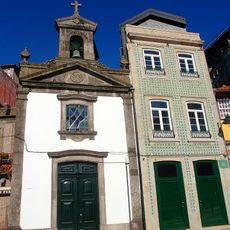
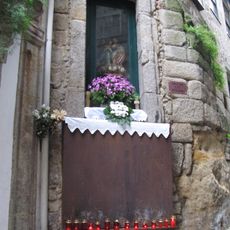
The walls' gates shaped daily life: the Porta dos Carros replaced a 1409 postern in 1551 so stone carts could reach the Rua Chã, and the Porta de Vandoma, the widest gate, let carts through until its demolition in 1855. The Porta das Mentiras became Nossa Senhora das Verdades in the 14th century.
The best way to explore the walls is to climb the Caminho Novo staircase, as this area is well-accessible and safe for visitors. Sturdy footwear is important since the stairs are steep and the paths can be uneven.
The Fernandina walls were declared a National Monument in 1926, and in 1996 they were included in the UNESCO World Heritage listing of Porto's historic centre. The surviving stretches and towers are protected as part of that designation.
The community of curious travelers
AroundUs brings together thousands of curated places, local tips, and hidden gems, enriched daily by 93,135 contributors worldwide.