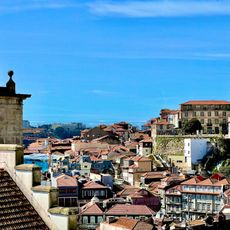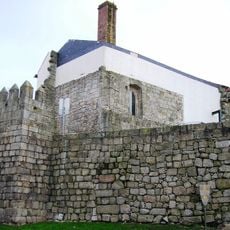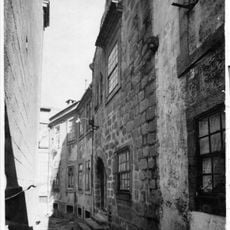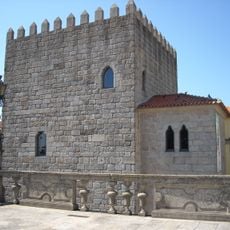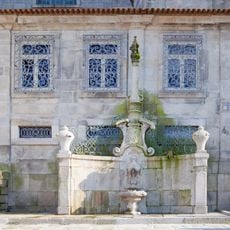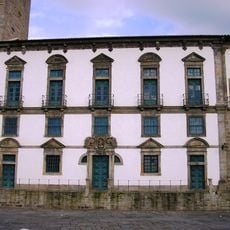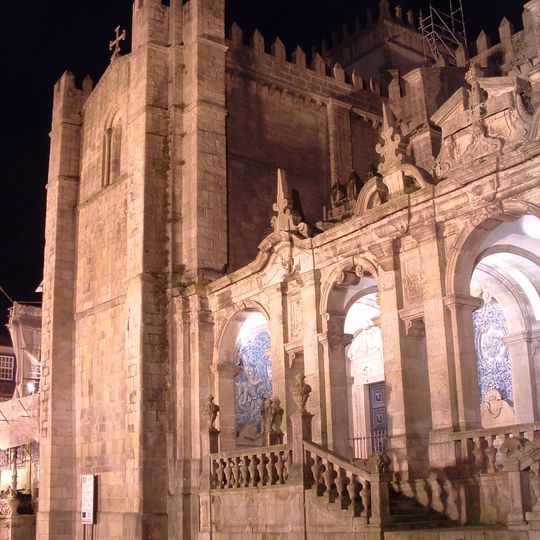
Porto Cathedral, Cathedral in Porto, Portugal
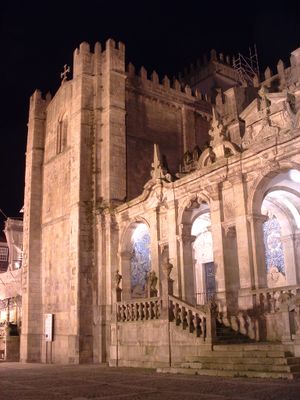
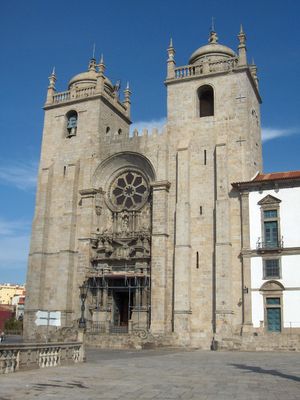
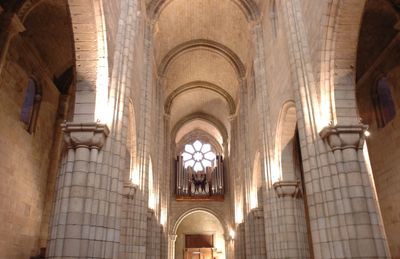
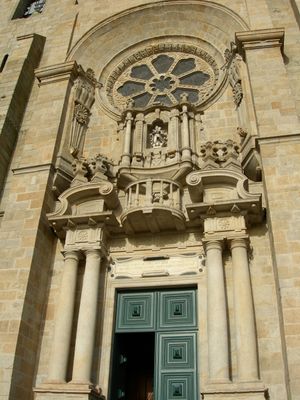
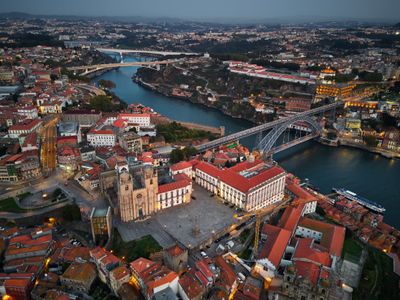
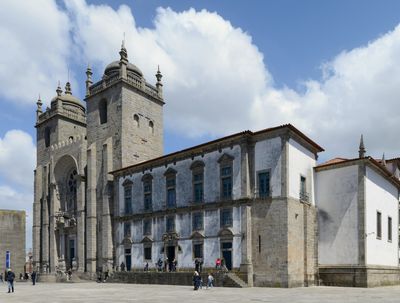
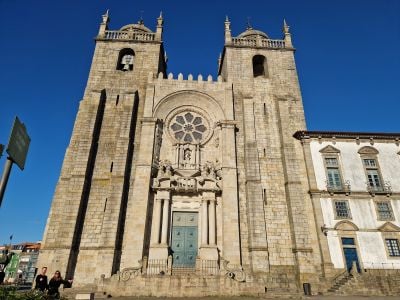
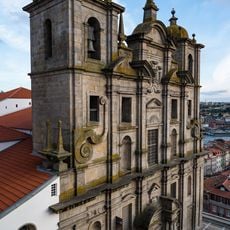
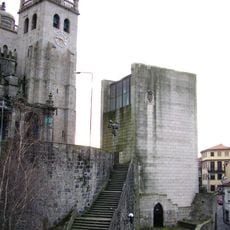
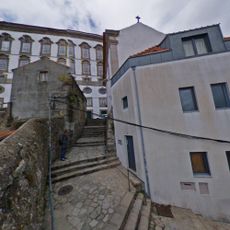
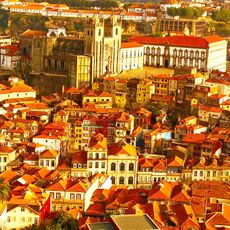
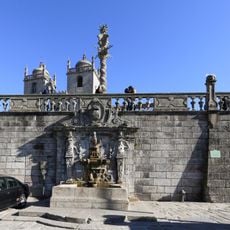
Porto Cathedral is flanked by two square towers, each supported by two buttresses and crowned with a cupola. Its undecorated façade mixes a Baroque porch with a Romanesque rose window under a crenellated arch, giving the impression of a fortified church. The narrow Romanesque nave is covered by barrel vaulting, and its stone roof is held by flying buttresses, among the first used in Portugal.
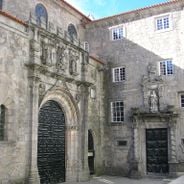
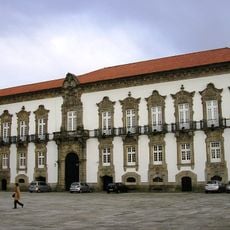
A chapel founded by Henry of Burgundy and his wife in 1108 stood here; the pre-Romanesque church was still recorded in 1147, so the present building was begun in the second half of the 12th century and work ran to the 16th. The Gothic chapel of João Gordo followed around 1333, the cloister in the 14th–15th centuries, and Nicolau Nasoni's Baroque loggia in 1736, with a new main portal in 1772.
The Gothic cloister, reached from the south transept, carries baroque azulejos by Valentim de Almeida, laid between 1729 and 1731, depicting scenes from the Song of Songs. On the terrace, tile panels are the work of António Vidal. The chapter house ceiling was painted in 1737 by Pachini with allegories of moral values.
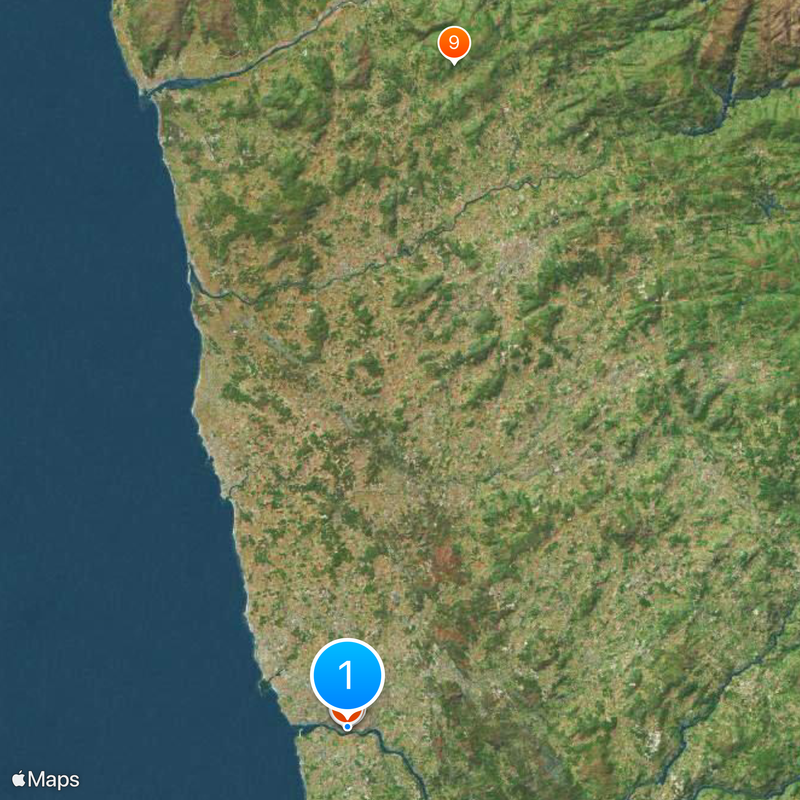
The cathedral is easily accessible in central Porto within an active neighborhood area. It helps to arrive early in the day to avoid crowds and better observe the details in the cloisters and chapels.
King João I married Philippa of Lancaster here in 1387, a union that politically connected Portugal and England. This royal wedding made the cathedral an important place in Portuguese historical memory.
The community of curious travelers
AroundUs brings together thousands of curated places, local tips, and hidden gems, enriched daily by 94,631 contributors worldwide.