Upper Gardens of Peterhof, Imperial gardens at Petergof, Russia
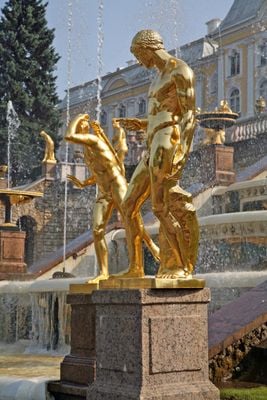
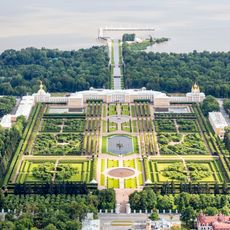
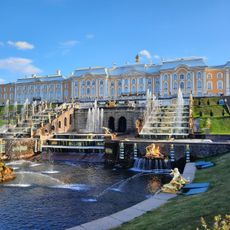
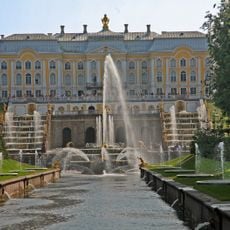
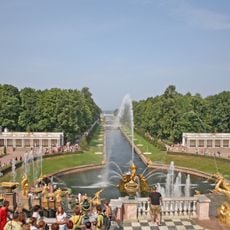
The Upper Gardens of Peterhof form an expansive park laid out with symmetrical patterns, multiple fountains, sculptures, and flower beds arranged around the Grand Palace. The site displays the formal structure of a baroque garden with geometric pathways and cultivated green spaces throughout.
Construction began in 1714 and continued for several decades as the gardens grew into a major expression of imperial power and wealth. Leading European architects shaped the spaces using models from the great western European gardens.
The name reflects the site's location above the palace complex, where visitors can see the formal arrangement of pathways and green spaces laid out with precise symmetry. This baroque design remains the dominant visual language that shapes how people experience and move through the gardens today.
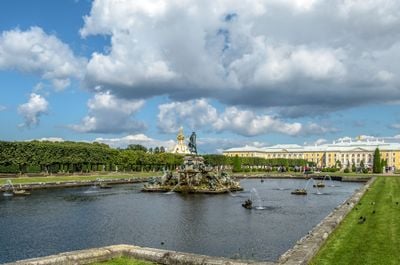
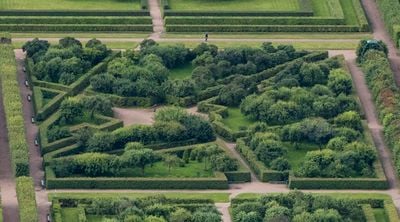
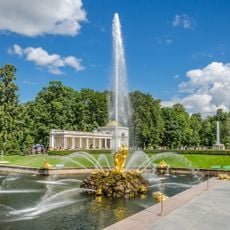
The garden is a long rectangle enclosed by a fence on three sides, with a parterre running from the main gate to the Grand Palace and three rectangular bosquets on each side, separated by alleys. Five fountains stand within it, including the Neptune group in the large rectangular pond. The garden reopened in summer 2024 after reconstruction begun in 2020.
The Neptune group in the central pond was cast in Nuremberg in 1660 by Georg Christoph Schweiger and the goldsmith Ritter. Emperor Paul I bought it for 30,000 rubles during his European travels and first intended it for Gatchina. Removed to Germany during the war, it returned to Peterhof in 1947 and ran again from 1956.
The community of curious travelers
AroundUs brings together thousands of curated places, local tips, and hidden gems, enriched daily by 94,551 contributors worldwide.