Tizdar, hill in Krasnodar Krai, Russia
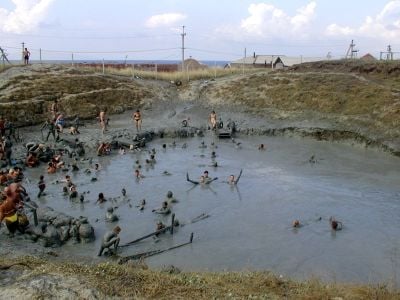
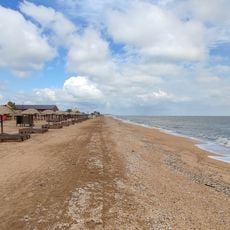
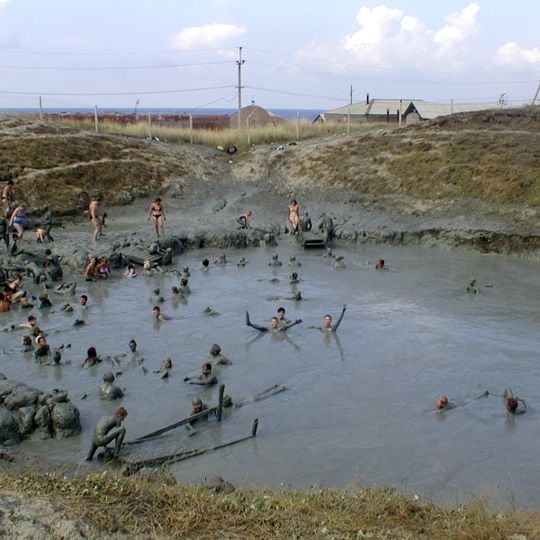
Tizdar is a mud volcano in the Sineya Balka tract, about 1 km east of Tizdar hill and 50 m from the Azov Sea, near the village of Za Rodinu. Its crater holds a mud lake 15–20 m across and about 1 m deep, filled with grey mud rich in hydrogen sulphide, bromine and iodine. The 1919 explosive eruption destroyed its cone.
This mud volcano formed during the creation of the Taman Peninsula in ancient geological times through tectonic forces and underground hydrocarbon reserves. These processes continue to drive the ongoing volcanic activity visible today.
The crater lake lies about 50 m from the Azov Sea shore, and the mud pool inside measures 15–20 m across with a depth of roughly one metre. The mud is dense and grey, and the banks around the basin are bare, uneven earth. Sturdy footwear helps on the sloping ground.
The mud here holds high levels of iodine, bromine, and boron, making its chemical composition different from other volcanic sites in the region. This mineral richness is why the location attracts people interested in the geological and chemical aspects of the place.
The community of curious travelers
AroundUs brings together thousands of curated places, local tips, and hidden gems, enriched daily by 94,452 contributors worldwide.