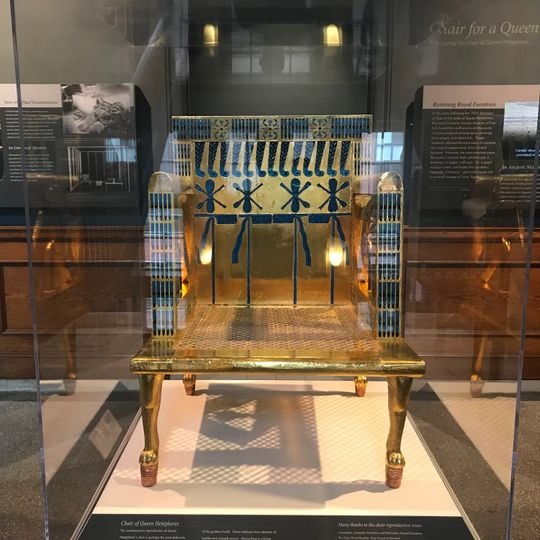
Harvard Museum of the Ancient Near East, Archaeological museum in Cambridge, United States.
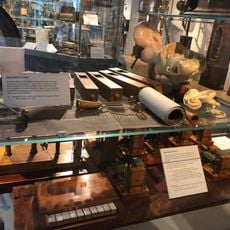
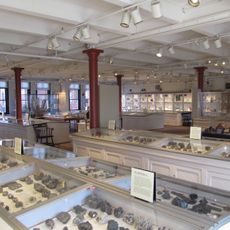
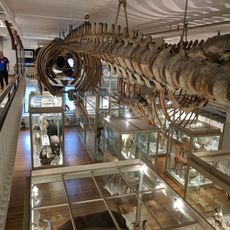
The Harvard Museum of the Ancient Near East is an archaeological museum on the Harvard University campus in Cambridge, Massachusetts, housing objects from the ancient Near East and Mediterranean region. The galleries display pottery, tools, jewelry, cylinder seals, and cuneiform tablets recovered from excavations at ancient sites.
The museum was founded in 1891 as a research center tied to Harvard's excavation projects in Mesopotamia and Egypt, and its collections grew directly from those digs. Over the following decades it shifted toward public education alongside its academic role.
The collection holds objects from digs in Mesopotamia, Egypt, and the Levant, giving visitors a direct look at how people lived and worked in those regions thousands of years ago. The cuneiform tablets on display are among the most tangible examples of early writing that visitors can see up close.
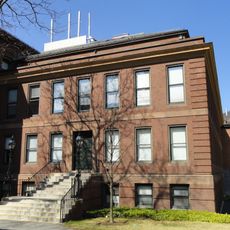
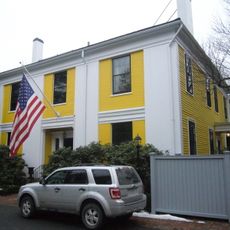
The museum sits inside the Semitic Museum building on Harvard's main campus and is easy to reach on foot from central Cambridge. Allow enough time to read the exhibit labels carefully, as they provide substantial context for the objects on display.
The building that houses the museum, the Semitic Museum, was taken over by military authorities during World War II and stopped functioning as an exhibition space until it reopened in 1982 after extensive renovation. The galleries visitors see today were essentially rebuilt from scratch after that long closure.
The community of curious travelers
AroundUs brings together thousands of curated places, local tips, and hidden gems, enriched daily by 92,532 contributors worldwide.













![Gund Hall - Graduate School of Design [Harvard University]](https://img9.digsty.com/MxS4GVZZ6ceYqvq7BmvRuupz_5GuWC2qfiT2RNpQJoc/rs:fill:230:230:1/g:fp:0.5:0.5/czM6Ly9hcm91bmR1cy8xNC8xNjU4ODA5MjItOTIwYmE4YTUuanBn.jpg)
