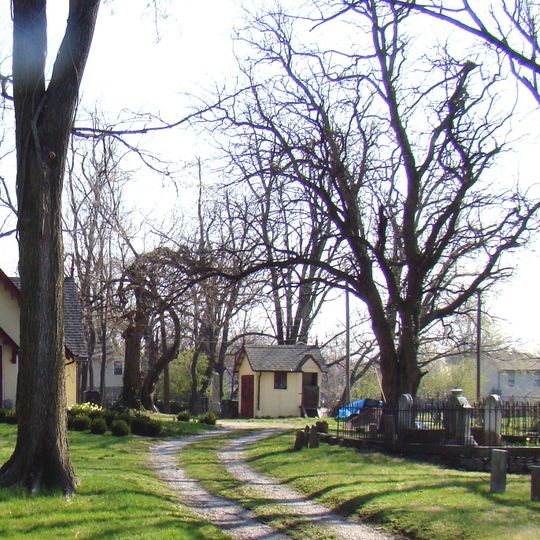
Episcopal Burying Ground and Chapel, historic cemetery in Kentucky, United States
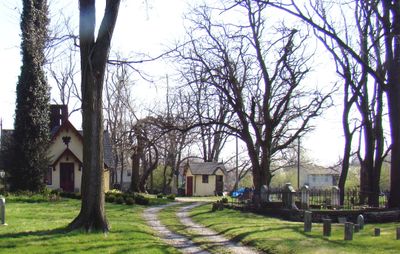
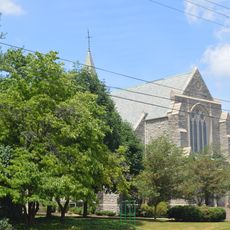
The Episcopal Burying Ground and Chapel is a cemetery and small church building on East Third Street covering about 2 acres with hundreds of graves marked by simple 19th-century stones. The chapel, built in 1867, features Carpenter Gothic style with pointed windows and detailed woodwork and was later used as a residence for the sexton.
The burial ground was established in 1832 when Christ Church purchased land for members to be buried, and became heavily used during the 1833 cholera epidemic that killed over 500 people. The chapel was designed in 1867 by local architect John McMurtry, and the site was added to the National Register of Historic Places in 1976.
The burial ground served as the resting place for Christ Church members and reflects the religious life of early Lexington. The graves reveal the social diversity of the period, including those of formerly enslaved people like London Ferrell, who was a minister that stayed during the cholera outbreak.
The cemetery is located on East Third Street and is easy to reach on foot, with the small chapel positioned in the middle of the grounds. Paths lead through the gravesites, making it simple to walk among the stones at your own pace while respecting the quiet nature of the space.
The burial ground is sometimes called Lexington's Westminster Abbey because it holds many prominent citizens who shaped the city's history. Notably, it includes the grave of William 'King' Salomon, known as the town drunk, and London Ferrell, a formerly enslaved minister whose grave stands as one of the few visible reminders of the local slavery history.
The community of curious travelers
AroundUs brings together thousands of curated places, local tips, and hidden gems, enriched daily by 91,817 contributors worldwide.