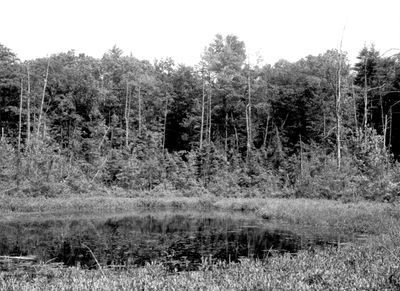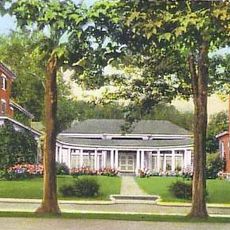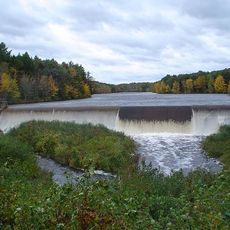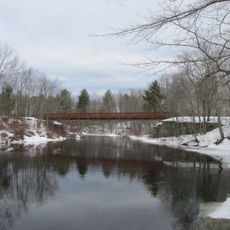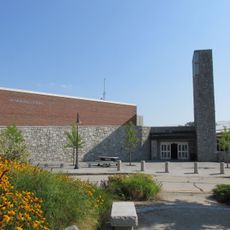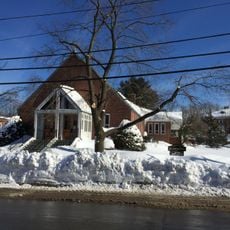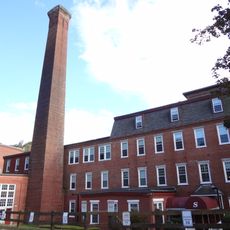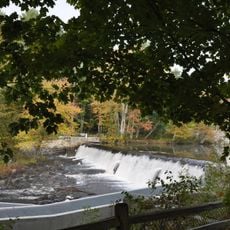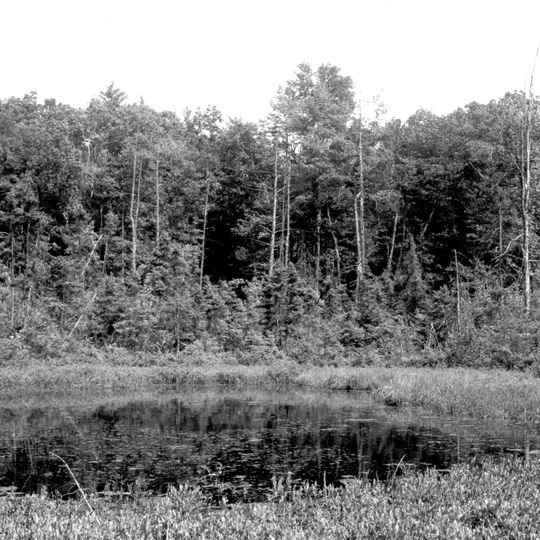
Spruce Hole Bog, National Natural Landmark bog in Durham, New Hampshire.
This protected wetland encompasses approximately 35 acres of sphagnum moss-dominated peatland featuring carnivorous plants, black spruce trees, and acidic waters that support specialized flora and fauna adapted to nutrient-poor conditions.
Designated as a National Natural Landmark in 1972, this kettle hole formation originated during the last glacial period when melting ice blocks created depressions that gradually filled with organic material over thousands of years.
Local conservation efforts by Durham residents have preserved this site as a natural laboratory where early explorers and botanists studied rare plant species, establishing its reputation as an important ecological research destination.
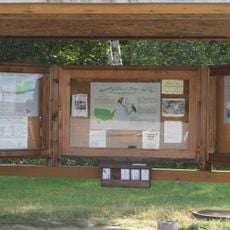
Visitors can access the bog via Packer's Falls Road using marked boardwalks and trails designed to minimize environmental impact, with guided tours and educational programs available through local conservation organizations.
The bog's well-preserved peat deposits serve as a historical climate record, allowing scientists to reconstruct past environmental conditions while supporting carnivorous sundews and pitcher plants that thrive in its acidic ecosystem.
The community of curious travelers
AroundUs brings together thousands of curated places, local tips, and hidden gems, enriched daily by 90,804 contributors worldwide.