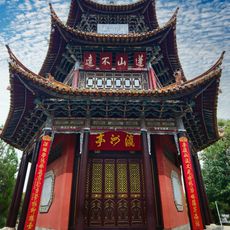
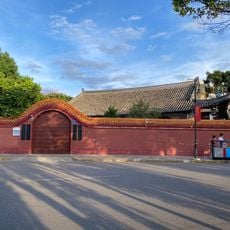
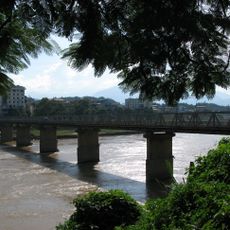
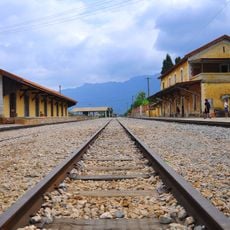
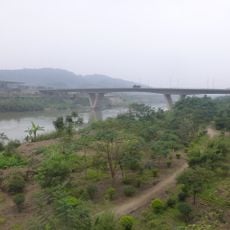
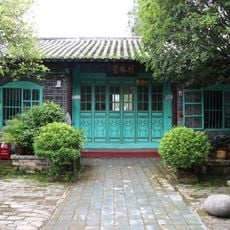
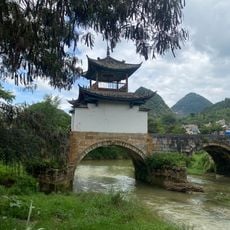
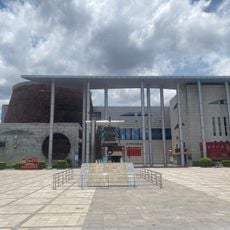
牡宜遗址, Archaeological site in Guangnan County, China
The Muyi archaeological site is an excavated settlement with exposed house foundations, tools, and pottery from multiple historical periods layered together. The dig reveals successive waves of occupation preserved in distinct soil layers, each containing evidence of how people lived during their time here.
The site shows human occupation spanning from around 111 BCE to 316 CE during the Gouding Kingdom period, representing the earliest known settlement in this southwestern region. The layered deposits track changes in how people built their homes and made their tools across many centuries.
The artifacts and dwelling foundations reveal how ancient people adapted to life in this part of southwestern China, using locally available materials and techniques. These remains show patterns of daily work, family structures, and the ways communities organized themselves over many generations.
The site is accessible from Wenshan Airport using local transportation, with guided tours arranged through regional tourism offices in Guangnan County. It helps to hire a guide to understand the excavated structures and what the different layers represent.
The site preserves an unusually clear record of craft tools used for stonework and pottery making, showing that early residents developed specialized skills passed down through families. This evidence suggests the settlement was more than a temporary camp, with real expertise built up over time.
The community of curious travelers
AroundUs brings together thousands of curated places, local tips, and hidden gems, enriched daily by 60,000 contributors worldwide.