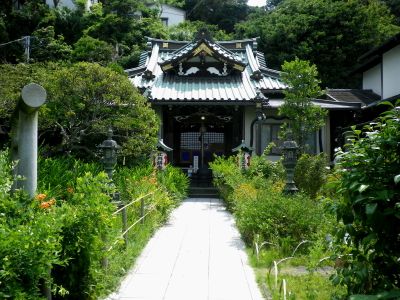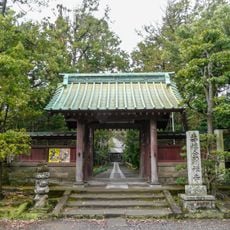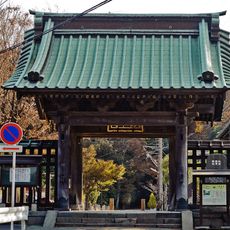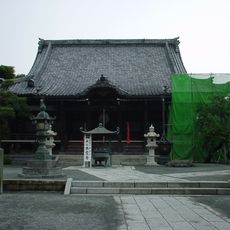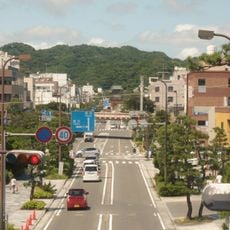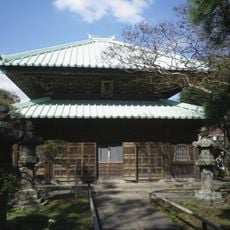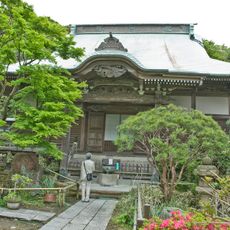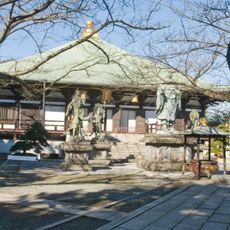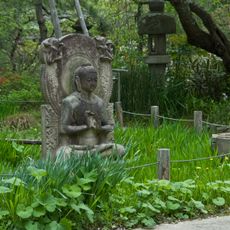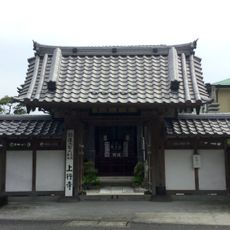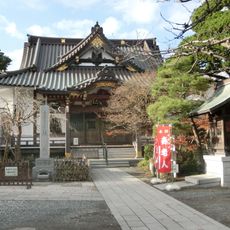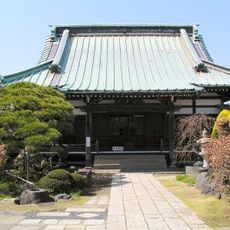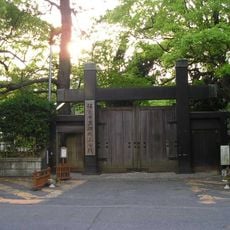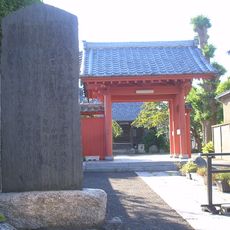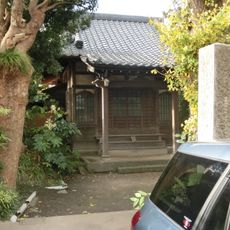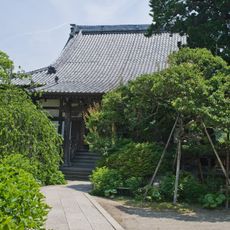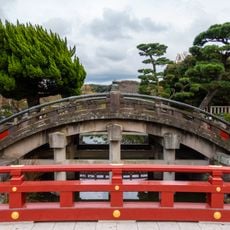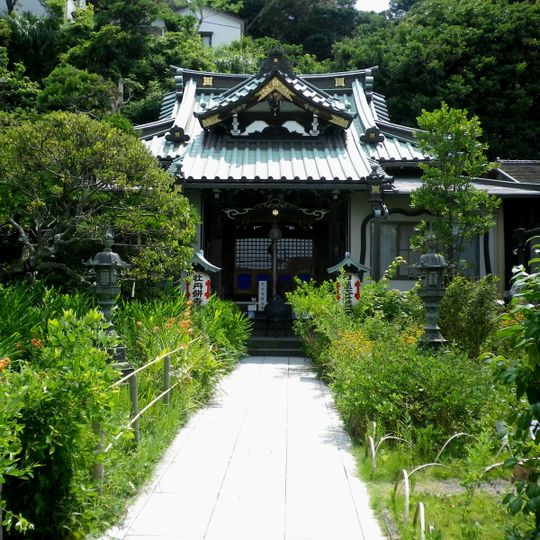
Jōei-ji, Buddhist temple in Miyanoshita, Yamaguchi, Japan
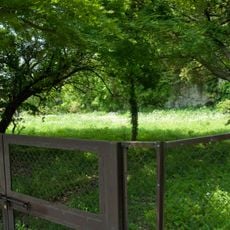
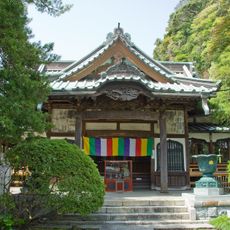
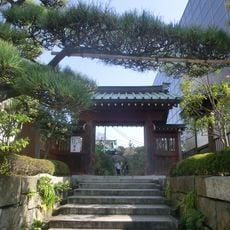
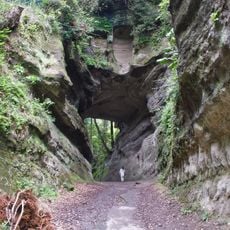
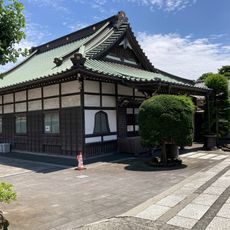
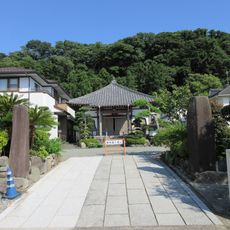
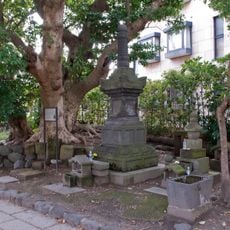
Jōei-ji is a Zen Buddhist temple in Ōmachi, Japan, known for its traditional stone garden with a pond and a dry waterfall arrangement. The garden is enclosed by forest on three sides, while the southern end opens onto a more open area.
The temple was founded in 1563 by Mōri Motonari as a memorial to his son Takamoto, who had died before him. It moved several times over the following centuries before settling at its current location.
The garden follows the Rinzai Zen tradition, where stones, moss, and water are arranged to guide quiet observation rather than active movement. A dry waterfall made of carefully placed rocks draws the eye and gives the space its focal point.
The temple is within walking distance of Miyano Station and can also be reached by car from Yamaguchi Station on the JR West Line. Morning visits tend to offer softer light across the garden and fewer other visitors.
The garden was laid out by the monk Sesshū Tōyō, who is far better known as a painter and is considered one of the most influential artists of 15th-century Japan. It is rare for a visual artist to be credited with garden design, and this garden is one of the few surviving examples of his work in that form.
The community of curious travelers
AroundUs brings together thousands of curated places, local tips, and hidden gems, enriched daily by 90,754 contributors worldwide.