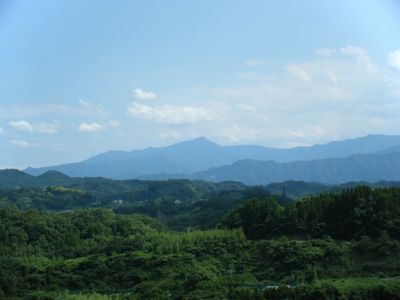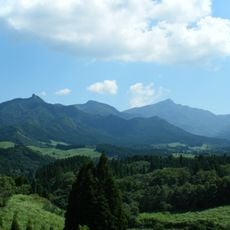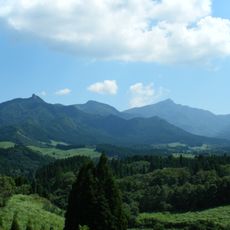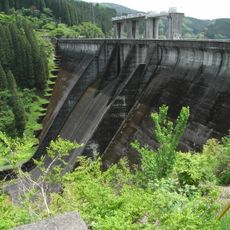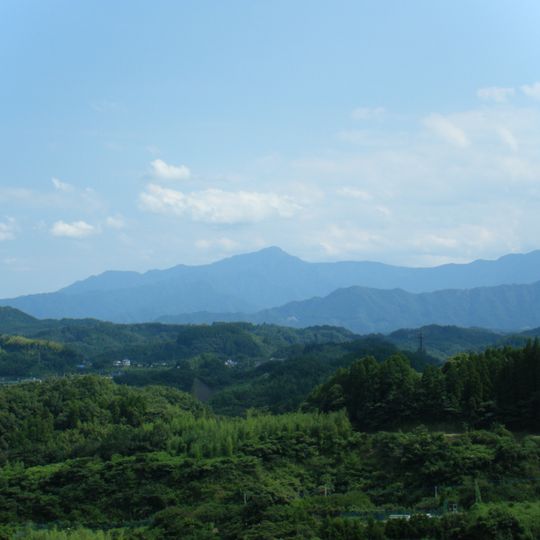
Mount Katamuki, Mountain summit in Bungoōno, Japan.
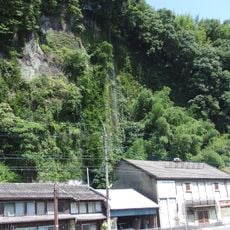
Mount Katamuki rises to 1605 meters and features steep slopes covered with dense forests of beech and hemlock trees. The vegetation shifts noticeably with elevation, transitioning from mixed woods below to pure beech groves near the summit.
The mountain formed during two volcanic periods roughly 13 and 10 million years ago, shaping the region's geological character. These ancient eruptions left lasting marks on the land's structure and composition.
The name Katamuki comes from a Japanese word meaning to lean or tilt, inspired by how the mountain slopes toward Mount Sobo nearby.
The main access is through the Kuori trailhead, which provides clear direction and passes through distinct vegetation zones. Visitors should expect changing conditions as you ascend, with temperatures dropping and weather becoming more variable at higher elevations.
Beneath the mountain lies an extinct caldera that holds geological clues to much older volcanic activity in the region. This hidden structure reveals layers of earth history that most hikers never notice from the summit above.
The community of curious travelers
AroundUs brings together thousands of curated places, local tips, and hidden gems, enriched daily by 60,000 contributors worldwide.