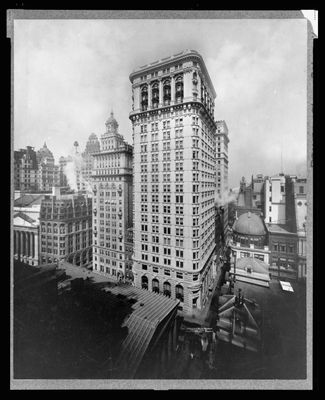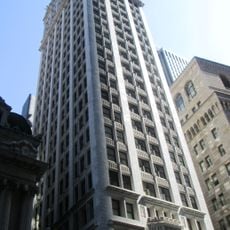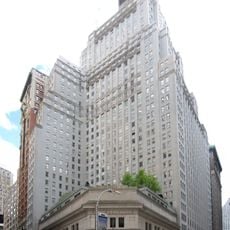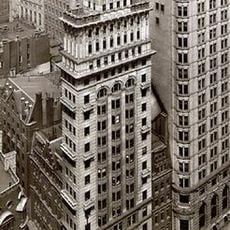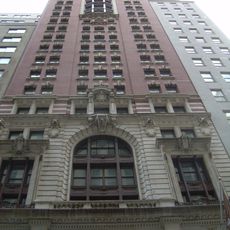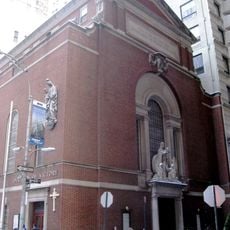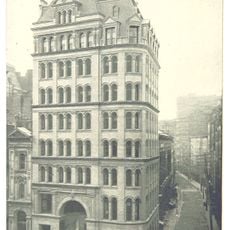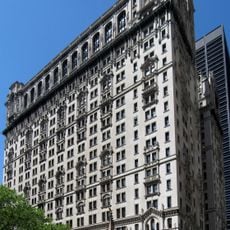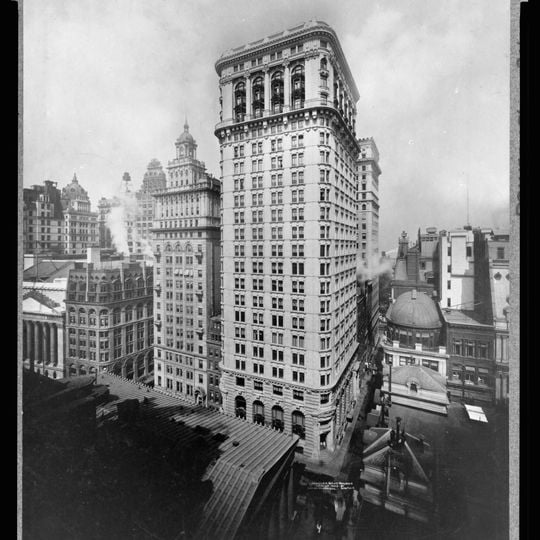
Hanover Bank Building, Neoclassical office building in Lower Manhattan, US.
The Hanover Bank Building was a 22-story office structure at the corner of Pine Street and Nassau Street in Lower Manhattan that rose 117 meters into the air. The Neoclassical structure featured columned facades and traditional architectural details typical of financial institutions of that era.
The building was constructed between 1901 and 1903 under architect James B. Baker's direction and was a symbol of Wall Street's growing wealth. Its demolition in 1931 by Bankers Trust marked a turning point in the financial district's shift toward more modern structures.
The building shaped how the financial district looked through its classical style and showed how banks expressed their power and stability through architectural forms. Its columns and ornate facades were signs of the trust that business people placed in their financial institutions.
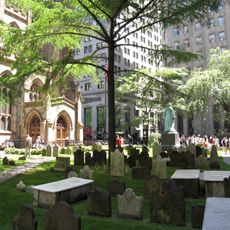
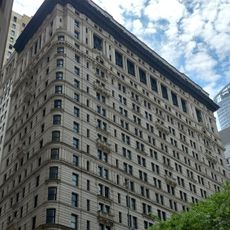
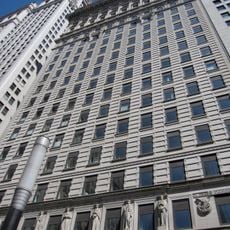
The site was located at a key crossroads in the historic financial district and was easily accessible to pedestrians. The surroundings today are shaped by modern buildings that replaced the original structure.
The building was completely demolished to make room for Bankers Trust expansion, a decision that reflected the financial power of large corporations in the early 20th century. This demolition is an example of how quickly even substantial structures in New York can be replaced by economic interests.
The community of curious travelers
AroundUs brings together thousands of curated places, local tips, and hidden gems, enriched daily by 92,553 contributors worldwide.