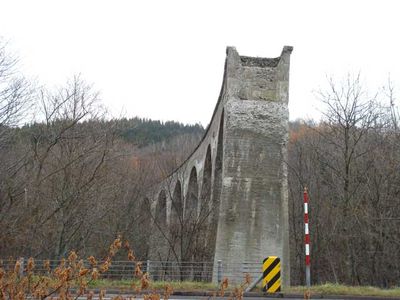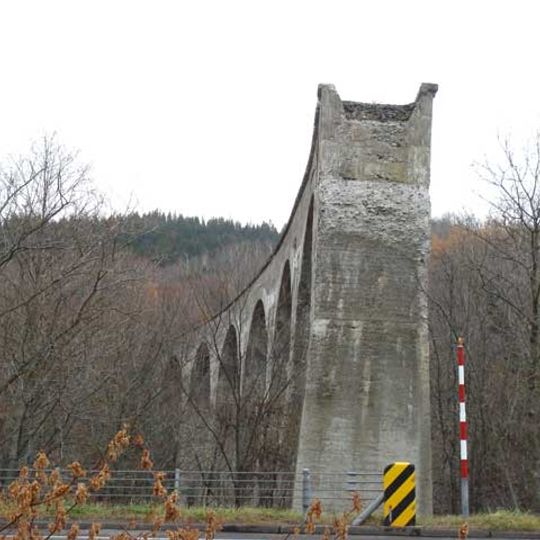
越川橋梁, Registered Cultural Property bridge in Shari, Japan.
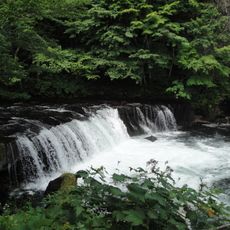
The Yoshikawa Bridge spans a natural gorge along the Kompoku Line, displaying construction methods typical of pre-war Japanese railway infrastructure. The structure combines stone and metal elements that reflect the engineering approach of that period.
Built in 1939, this bridge emerged during Japan's period of rapid railway expansion, when the nation connected remote areas through infrastructure development. It represents an era of intensive transportation projects across the country.
The bridge holds official status as a Registered Tangible Cultural Property, reflecting Japan's commitment to preserving structures that showcase engineering skill and construction innovation. You can see how this recognition has kept the site valued as part of local heritage.
You can best experience the bridge by approaching it along the railway corridor and noting its position relative to the gorge below. Local guides or signage can help direct you to the best vantage point for viewing the structure.
The bridge displays an uncommon blend of modern steel construction and traditional stone arching, illustrating the transitional engineering of the 1930s. This hybrid crafted design often goes unnoticed when compared to later Japanese bridge projects.
The community of curious travelers
AroundUs brings together thousands of curated places, local tips, and hidden gems, enriched daily by 60,000 contributors worldwide.