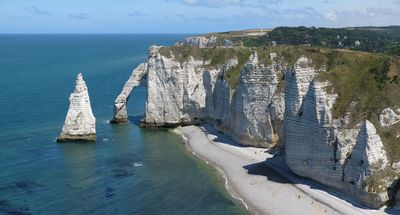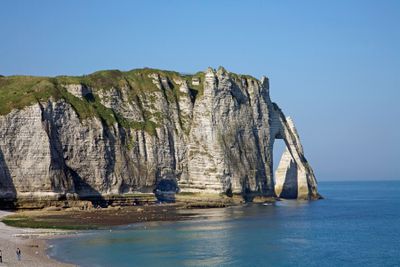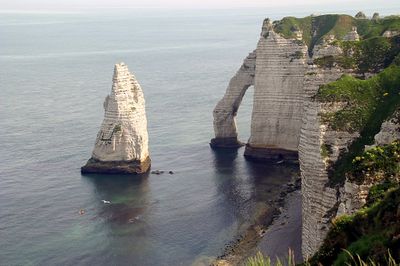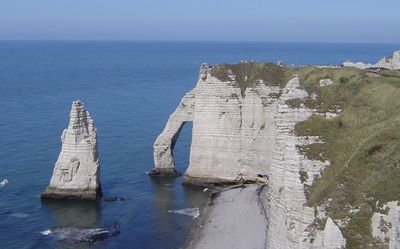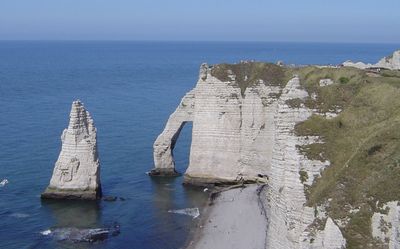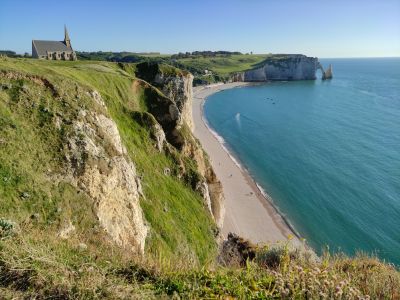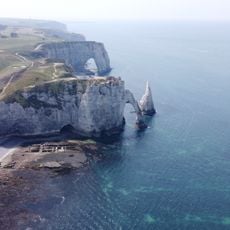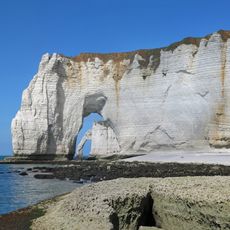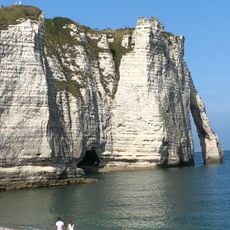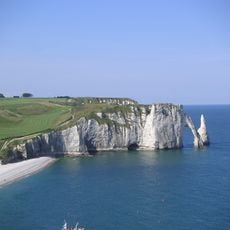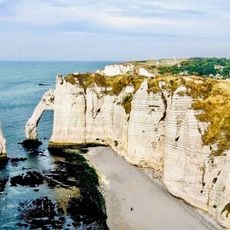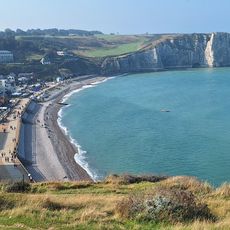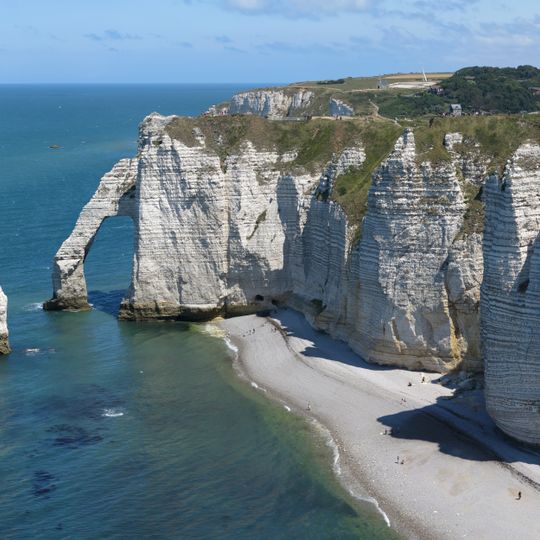
Porte d'Aval, Natural arch on the coast of Étretat, France.
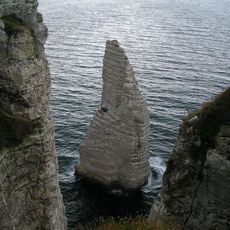
Porte d'Aval is a limestone rock formation on the Étretat coast that rises from the sea and includes a towering needle-shaped rock jutting upward. The arch and rock formations were created by erosion as waves continuously worked against the stone over time.
The site became known in the 19th century as the region transformed from a fishing village into a destination for painters and writers. Artists arrived to capture and celebrate the distinctive coastal landscape.
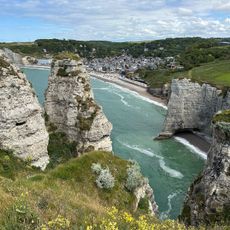
The rock formation has drawn artists and visitors for generations seeking to experience its striking coastal landscape from different vantage points. People walk along the clifftop and pause at observation points to take in the changing views throughout the day.
Visitors can reach the arch base during low tide from the beach level, while a steep path from the clifftop provides wider views of the formation. Best conditions for exploring are calm weather and sturdy footwear for the uneven terrain.
The arch is frequently compared to an elephant dipping its trunk into the sea, a poetic description that shaped how artists and writers interpreted the site. This imaginative comparison became central to how people understood and celebrated the formation.
The community of curious travelers
AroundUs brings together thousands of curated places, local tips, and hidden gems, enriched daily by 60,000 contributors worldwide.