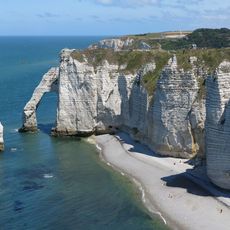
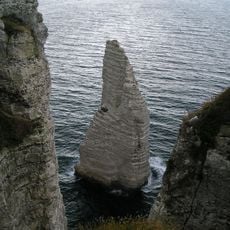
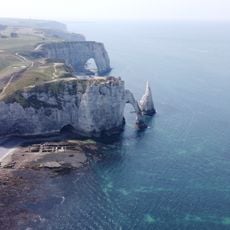
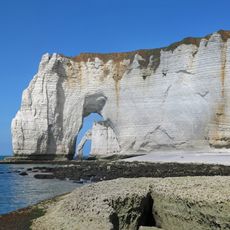
Porte d'Amont, Rock arch in Étretat, France.
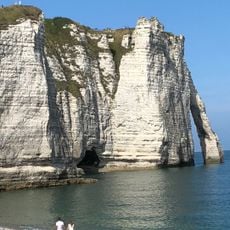
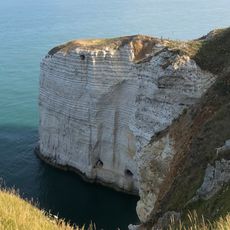
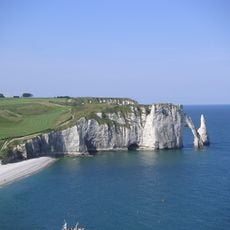
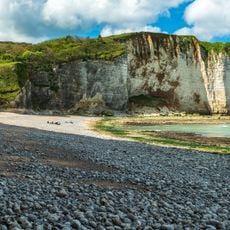
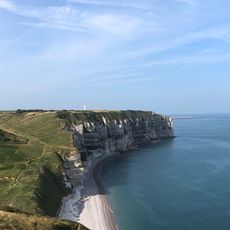
Porte d'Amont is a chalk cliff at Étretat, 39 metres high, crossed by brown-black flint layers and running about 120 metres northwest into the English Channel. At its tip a rock arch with a rounded top opens onto the sea; the cliff face above is sheer and blocky, with a head-like profile carved or suggested in the upper right stone.
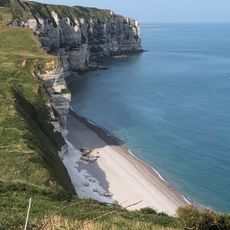
The chalk of Porte d'Amont belongs to the Alabaster Coast of Normandy, laid down as sediment in a shallow sea and cut by brown-black bands of flint. The narrow spur runs about 120 m northwest into the English Channel, and wave action has opened the arch at its tip. The cliff has long been painted, notably by Claude Monet.
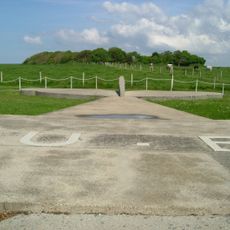
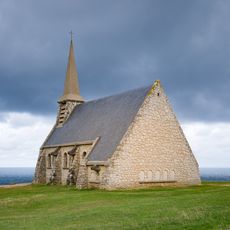
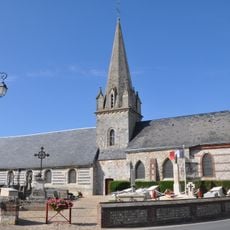
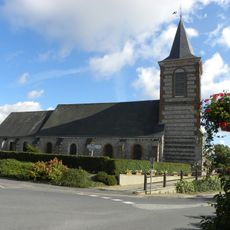
Porte d'Amont has long been painted by artists, and works by Claude Monet show the formation. Inland on the ridge above it stand the chapel Notre-Dame-de-la-Garde and the Nungesser-and-Coli memorial, named for the aviators who attempted the 1927 Atlantic crossing.
The best way to see this arch is from the Étretat beach promenade, where easy walking paths lead to several viewing points. The experience is best during low tide, when more beach is exposed and you can see the formation from different angles.
The arch is only the tip of a narrow chalk spur that runs about 120 metres northwest into the English Channel; the whole formation is also called Falaise d'Amont or Cap de la Porte d'Amont. Inland on its back stand the Chapel of Notre-Dame-de-la-Garde and the Nungesser-and-Coli Memorial to the aviators' 1927 Atlantic attempt.
The community of curious travelers
AroundUs brings together thousands of curated places, local tips, and hidden gems, enriched daily by 93,799 contributors worldwide.