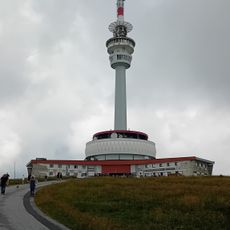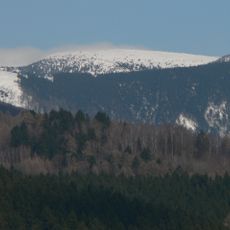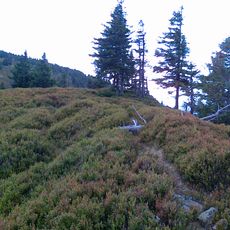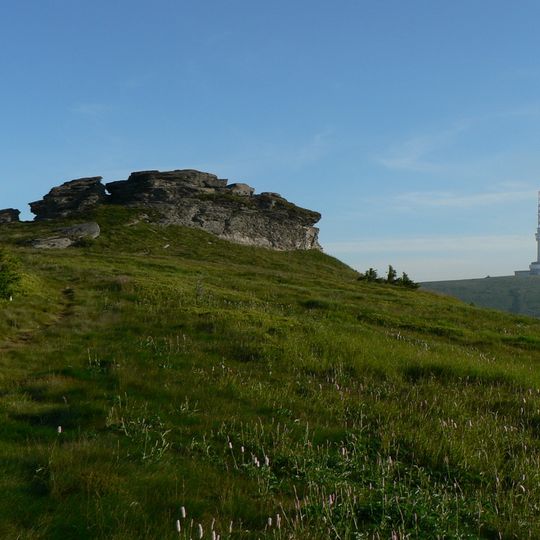
Petrovy kameny, Mountain peak with phyllite formations in Malá Morávka, Czech Republic
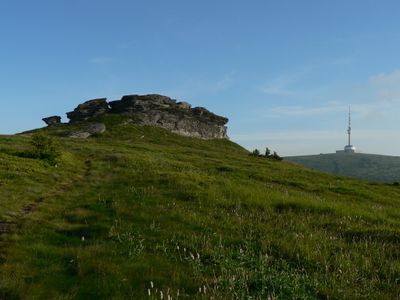
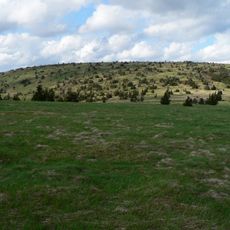
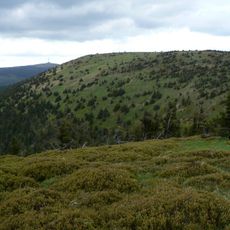
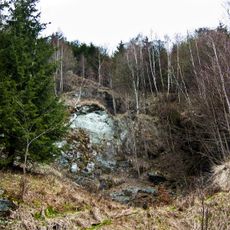
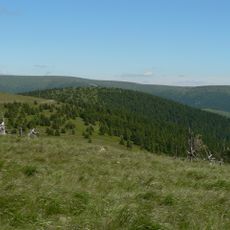
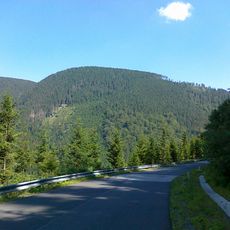
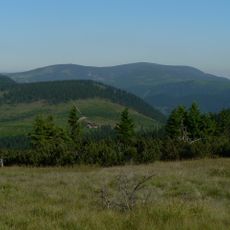
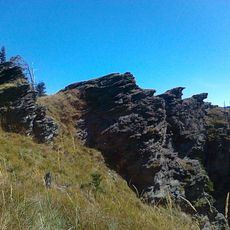
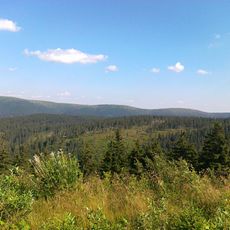
Petrovy kameny is a 1,447 m peak in the Hrubý Jeseník range, rising about 1.6 km south of Praděd. Its summit is a frost-weathered rock group roughly 45 by 10 m, made of three main blocks up to 7 m high, built of phyllite and quartzite.
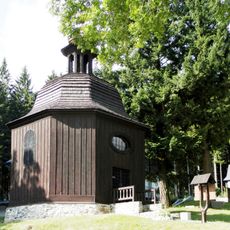
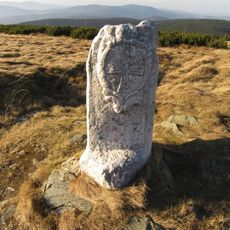
During the 17th-century witch trials, Petrovy kameny was named as a site of witches' sabbaths. Around 1680 Emperor Leopold I ordered the mountain sprinkled with holy water; on 20 June 1682 it was consecrated, exorcised and marked with a stone pillar bearing a 60 × 60 cm relief of the Virgin Mary, later joined by a statue of St Peter. Both were destroyed under the Josephine reforms at the end of the 18th century, and fragments were found on the mountain in the 1970s.
The name comes from a legend about the blacksmith Petr, who hid on the summit with his beloved, the daughter of the Sovinec estate steward, and touched a "black stone" there. In the 17th-century witch trials the rocks were named as a meeting place for witches; in 1682 the mountain was consecrated and exorcised, and a stone pillar with a relief of Mary was set up, later destroyed under the Josephine reforms.
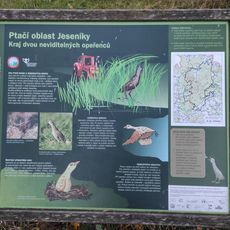
The summit rocks and their surroundings lie in the first zone of the Praděd National Nature Reserve, where leaving the marked trail is forbidden year-round and rangers fine offenders. The red trail passes close by, but the summit itself is off-limits; in winter, skiing is allowed only on the marked slopes served by four lifts.
The location sits on a major continental watershed that divides water flow toward the Baltic Sea from water heading toward the Black Sea. Rivers originating from this divide follow entirely different paths across Europe based on which side of the ridge they begin.
The community of curious travelers
AroundUs brings together thousands of curated places, local tips, and hidden gems, enriched daily by 92,217 contributors worldwide.