Danube-Oder-Elbe Canal, Planned waterway network in Moravian Gate, Czech Republic
The Danube–Oder–Elbe Canal was a proposed international waterway linking the Danube, Oder and Elbe, with the Morava playing a major role, notably the stretch already navigable for small boats along the Baťa Canal. Most of the work was to lie in the Czech Republic; the Elbe link would have required bridging a 250-metre height difference, while the Danube–Oder section crosses the Moravian Gate, Central Europe's lowest watershed, with 125 metres of climb on each side.
Renaissance historian Jan Dubravius wrote in 1552 that Charles IV had begun a canal to bring Venetian goods to Bruges via Bohemia. In 1653 the Moravian diet commissioned Filiberto Lucchese to link the Morava with the Oder; the king died in 1657 and Ottoman troops reached Moravia in 1663. A waterway law of 1901 provided for the Danube–Oder–Elbe canal, and in February 2023 the Czech government ended the project.
The name D–O–L appears in petitions by Prague's Chamber of Commerce and Trade from 16 March 1900, which demanded the canal's construction. The 1901 Waterways Act, signed on 11 June, anchored the project in law and set a 1904 start with a 20-year deadline. Boats were planned for the Danube type: 67 m long, 8.2 m wide, 600 t capacity at 1.8 m draft.
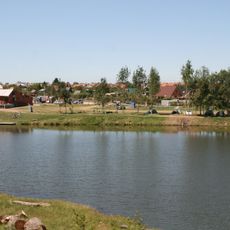
The region is located in the Moravian Gate, a natural passage in the landscape between Central Europe and its eastern borders. You can walk through the terrain and visit local museums that tell the story of this long-discussed project.
The Czech government ended the project in February 2023, not August, when it cancelled the land reserves set aside for the corridor. Only a few kilometres of preparatory construction exist, on the Oder–Danube section, and the Elbe link would have needed to overcome a 250-metre height difference.
The community of curious travelers
AroundUs brings together thousands of curated places, local tips, and hidden gems, enriched daily by 92,223 contributors worldwide.