Pompano Beach Mound, Native American burial mound in Pompano Beach, United States.
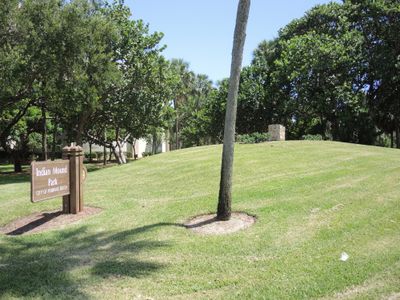
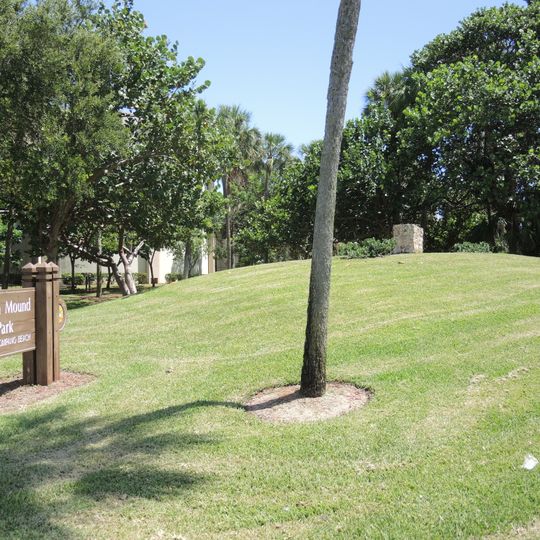
Pompano Beach Mound is an oval Tequesta burial mound 100 feet wide and 7 feet tall at Indian Mound Park, on the western shore of a barrier island. At its base lies a 6-inch layer of black dirt and shell with refuse, suggesting it was built over an earlier seasonal camp.
The site shows occupation dating back approximately 2000 years and was built and used by the Tequesta people. Excavations in 1938 revealed a rare wooden object that demonstrates ritualistic activity occurred here across centuries.
The mound served as a burial place for the Tequesta people who lived in this region. Visitors can see how this site reflects the spiritual importance the community placed on honoring their deceased.
The mound stands at the southeast edge of Pompano Beach, on the west shore of a narrow barrier island, inside Indian Mound Park in a densely built residential area. The park has been public ground since 1926 and a city park since the late 1950s, when two historical markers were placed. The oval earthwork is about 100 feet wide and 7 feet tall, so it can be circled on foot in a few minutes.
A 1938 excavation led by William C. Orchard, financed by the Heye Foundation, uncovered a wooden figure dated to 700 CE that amateur archaeologists and local press called the "Keeper of the Mound". Orchard also removed human remains, and the city withdrew his permit after local objections. The remains were reported by the National Park Service in 2010 for repatriation to the Miccosukee Tribe under NAGPRA.
The community of curious travelers
AroundUs brings together thousands of curated places, local tips, and hidden gems, enriched daily by 93,378 contributors worldwide.