American Museum of Ceramic Art, Ceramic art museum in Pomona, United States.
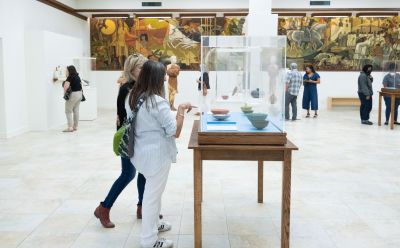
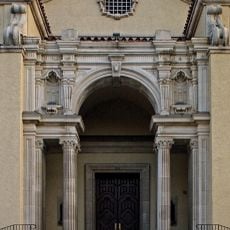
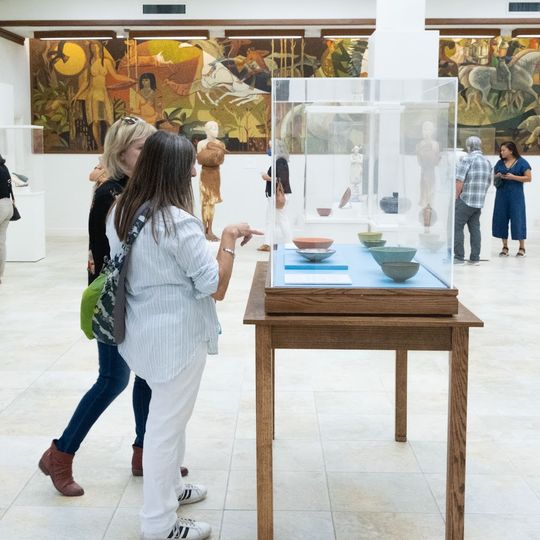
The American Museum of Ceramic Art occupies a former bank building across two floors, housing over 10,000 ceramic objects from different time periods and origins. The collection ranges from ancient vessels to contemporary works and demonstrates the wide range of ceramic art forms.
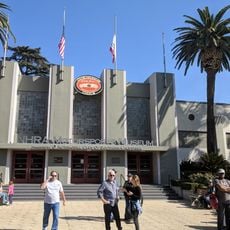
The museum was founded in 2003 by ceramic artist David Armstrong and relocated to its current building in 2011, a structure designed by Benjamin Anderson in 1956. The move brought the collection to a more central location in Pomona with expanded exhibition space.
The museum's name is shortened to AMOCA, and its lower level regularly displays several hundred pieces from the permanent collection. The Mettlach wares, German stoneware dating from about 1840 to 1915, came from Robert D. and Colette D. Wilson, who collected them over 30 years. At the 2012 opening, Isabella von Boch of Villeroy & Boch called it the largest such collection in the world.
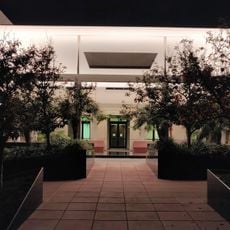
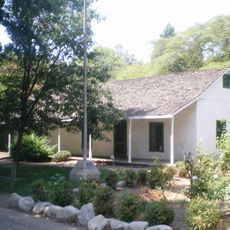
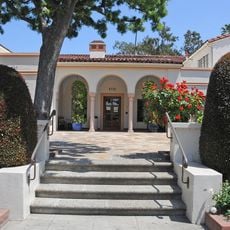
The museum occupies the former Pomona First Federal Savings and Loan building, designed by Benjamin Hall Anderson in 1956. Exhibitions are arranged over two levels, with several hundred pieces from the permanent collection displayed on the lower level. The building is in Pomona, California.
The 78-foot mural Panorama of the Pomona Valley, painted in 1956 by Millard Sheets with Susan Lautmann Hertel, hangs inside the former bank and is part of AMOCA's permanent collection. It traces the valley from Native American inhabitants to the railroad and Pomona's 1888 incorporation.
The community of curious travelers
AroundUs brings together thousands of curated places, local tips, and hidden gems, enriched daily by 92,593 contributors worldwide.