Besh-Ba-Gowah, Archaeological ruins in Globe, Arizona, United States.
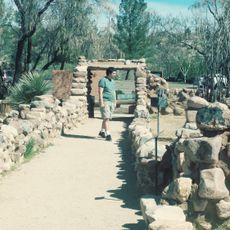
Besh-Ba-Gowah is an archaeological site with the remains of a pueblo settlement built on a ridge above Pinal Creek, featuring roughly 200 rooms made of stone. The buildings connect to each other through hallways and corridors, and the masonry shows traces of white plaster that once covered the walls.
Excavations at Besh-Ba-Gowah were first funded by the Federal Emergency Relief Administration and later by the Works Projects Administration, making the ruin one of the few reconstructed and stabilized Depression-era archaeological projects in Arizona. The site was listed on the National Register of Historic Places in 1984.
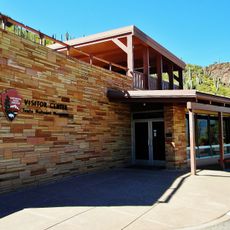
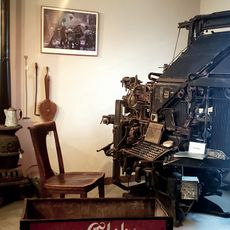
The name Besh-Ba-Gowah comes from Western Apache and is usually translated as "place of the metal" or "metal camp," a reference to the nearby copper deposits rather than to a single metalworker. The city-run museum beside the ruins displays pottery, stone tools and woven artifacts excavated at the site, which helped define the Salado culture concept.
The grounds offer accessible paths for visitors to explore the different areas of the ruins and visit the attached museum. The best time to visit is during the cooler months, as the area can become very hot.
Besh-Ba-Gowah is one of the Salado culture "type sites": material recovered here formed the basis for how archaeologists define the Salado concept. Excavation was first funded by the Federal Emergency Relief Administration and then by the Works Projects Administration, making the ruin one of the few reconstructed and stabilized Depression-era archaeological projects in Arizona. It was listed on the National Register of Historic Places in 1984.
The community of curious travelers
AroundUs brings together thousands of curated places, local tips, and hidden gems, enriched daily by 92,858 contributors worldwide.