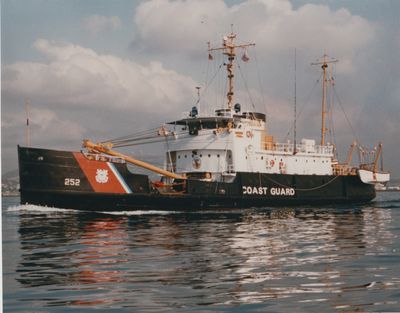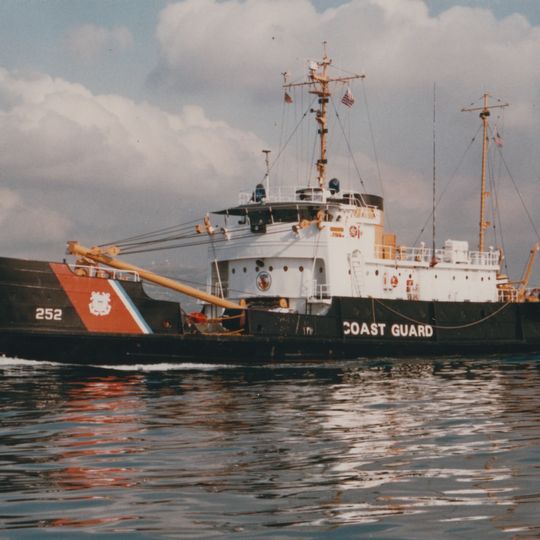
USCGC Walnut, Coast Guard cutter in Honolulu, United States.
The USCGC Walnut was a steel-hulled, steam-powered twin-screw tender of the Hollyhock class, built in 1939 at Oakland, California, and commissioned as a Coast Guard cutter on 8 July 1939. Converted from steam reciprocating to geared diesel drive in 1954, she was decommissioned on 1 July 1982 and transferred to the Honduran Navy.
Built in Oakland in 1939 for the Lighthouse Service, the Walnut was commissioned as a Coast Guard cutter on 8 July 1939 and served at Detroit until June 1941, when she moved to Honolulu. Moored at Midway's Long Dock on 7 December 1941, she anchored in the lagoon as a decoy, doused the island's navigation lights and rescued the crew of a crashed PBY. Decommissioned on 1 July 1982, she was handed to the Honduran Navy.
The ship's name follows the Lighthouse Service's practice of naming tenders after trees and plants, as with the Hollyhock class. During the 7 December 1941 attack on Midway, the crew rescued two seriously injured airmen from a crashed PBY Flying Boat while shells fell within 100 feet of the Walnut. The ship was decommissioned on 1 July 1982 and transferred to the Honduran Navy.
The Walnut was decommissioned on 1 July 1982 and handed over to the Honduran Navy, so there is no US vessel to board in Honolulu. The ship's wartime service is documented through records and photographs rather than an accessible hull; researchers should consult Coast Guard archives for her logs and the Midway action report.
The Walnut set the deepest aid to navigation in Coast Guard history: San Pedro Channel Traffic Lane Buoy #7TL, moored in 2,700 feet of water off Southern California. She also tested synthetic line instead of chain for deep-water moorings and, from 1980 to 1982, placed NOAA weather buoys serving offshore oil drilling.
The community of curious travelers
AroundUs brings together thousands of curated places, local tips, and hidden gems, enriched daily by 92,687 contributors worldwide.