Lancetilla Botanical Garden, Tropical research station in Tela, Honduras
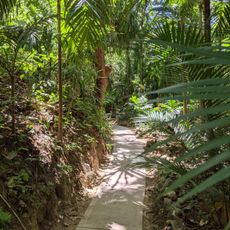
Lancetilla Botanical Garden is a botanical garden and arboretum in Tela, Honduras, covering 1,681 hectares: 1,261 hectares of natural reserve, 350 hectares of plantations, and a 70-hectare arboretum. Its collection holds about 1,500 species, mainly tropical fruit plants, including one of the world's richest banana collections and the largest mangosteen plantation in the Americas.
Wilson Popenoe chose the Lancetilla valley in 1926 on behalf of the United Fruit Company, founding a research station to study banana diseases and test other tropical fruit crops. Under his direction more than a thousand economically important plant varieties were gathered, propagated and shipped across tropical America. The garden later became a department of the National University of Forest Sciences (UNACIFOR).
The garden is named after the Lancetilla River, whose protected forest supplies Tela's drinking water. Its Asian fruit collection, with 636 species from 392 genera, began with introductions of lychee and rambutan that later spread across tropical America. The mango in the photograph, labelled LACETILLA on a paper strip, rests on a woven cane basket.
The garden lies 7 kilometers (4 miles) southeast of Tela and offers guided tours through the collections, including the largest mangosteen plantation in the Americas. Early morning hours work best for walks when temperatures are cooler and bird activity reaches its peak.
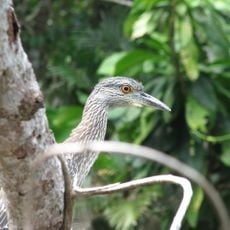
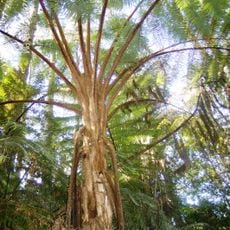
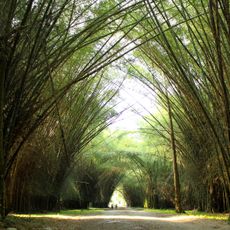
The facility hosts more than 250 bird species and forms a vital segment of the Mesoamerican Biological Corridor for wildlife preservation. Some of the oldest trees date back to the founding period in the 1920s and now reach considerable heights above the canopy.
The community of curious travelers
AroundUs brings together thousands of curated places, local tips, and hidden gems, enriched daily by 92,652 contributors worldwide.