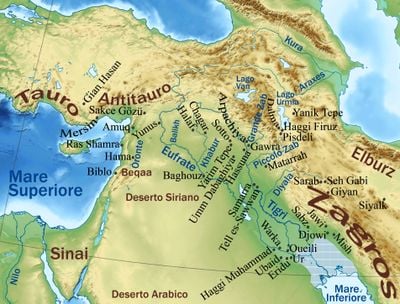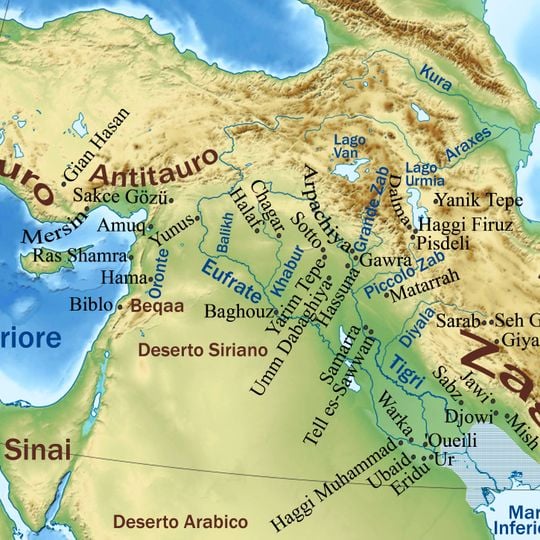
Yarim Tepe, Neolithic settlement in Sinjar valley, Iraq
Yarim Tepe is a Neolithic archaeological site in the Sinjar valley of northern Iraq, made up of three low mounds that contain layered remains of prehistoric settlements. Each mound sits gently above the surrounding plain and holds a different sequence of occupation, visible in cross-section as bands of mud-brick debris, ash, and compacted earth.
Soviet archaeologists carried out systematic excavations between 1969 and 1976, uncovering settlement layers from the Hassuna, Halaf, and Ubaid periods, the earliest dating to around 6000 BCE. Their work placed the site at the center of research into early village life in northern Mesopotamia.
Finds from Yarim Tepe, including painted pottery with animal motifs and small fired-clay figurines, show how daily life and symbolic practice were closely connected in early communities. Visitors walking the mounds today can observe the layered structure of the terrain, which reflects the slow accumulation of generations of human activity.
The site sits in open, flat countryside southwest of Tal Afar, with no shade or paved paths, so sturdy footwear and sun protection are important. A morning visit is more comfortable, as the terrain can become very hot later in the day.
The excavations uncovered the oldest known pottery kiln in Mesopotamia, suggesting that organized ceramic production developed here earlier than almost anywhere else in the region. Copper beads and a lead bracelet found at the same site point to early experiments with metal that ran alongside the development of fired clay objects.
The community of curious travelers
AroundUs brings together thousands of curated places, local tips, and hidden gems, enriched daily by 60,000 contributors worldwide.