Great Mosque of al-Nuri, Islamic religious complex in Mosul, Iraq
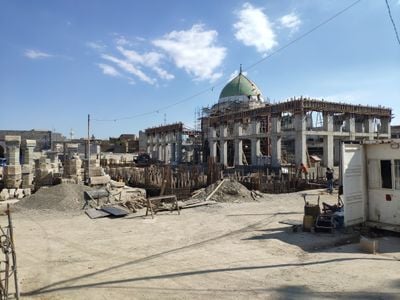
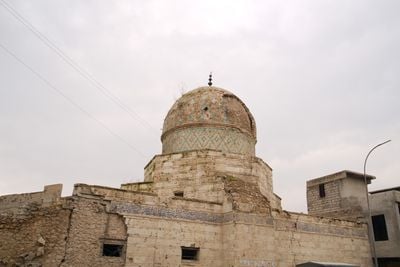
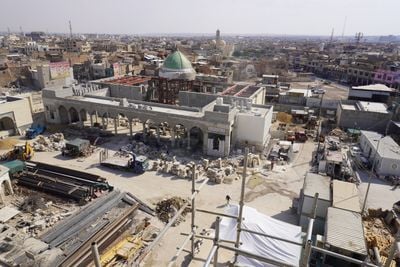
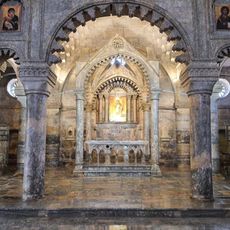
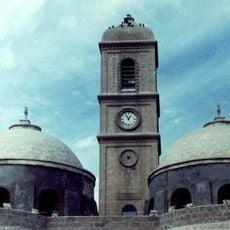
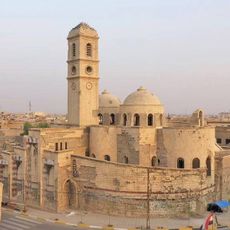
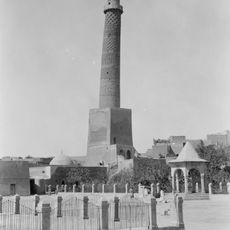
The Great Mosque of al-Nuri is a religious complex in the old city of Mosul in northern Iraq, originally comprising a large prayer hall, a courtyard, and a slender minaret. The walls carry geometric patterns and calligraphy in brickwork, while the courtyard is surrounded by arcaded walkways.
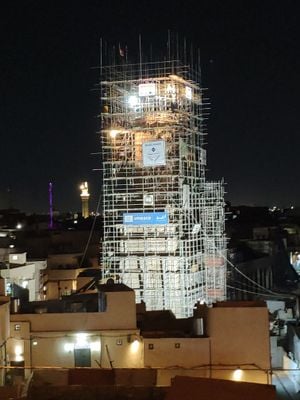
Nur ad-Din Zangi commissioned the complex in 1172 as a mark of his victory over the Crusaders. The tilted minaret, popularly called 'al-Hadba,' survived nearly nine centuries before its destruction in 2017 during fighting.
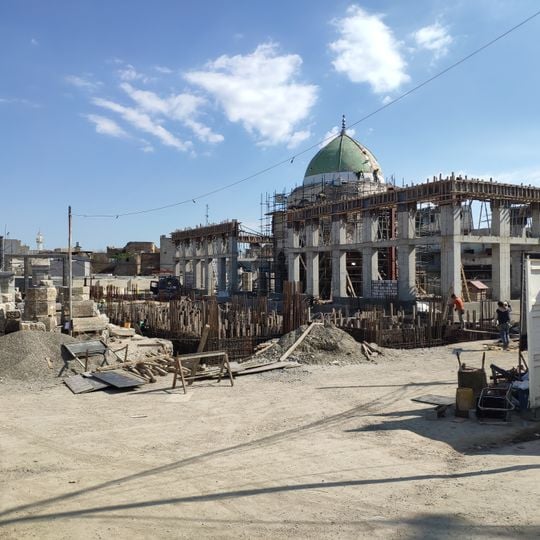
The name al-Nuri means 'the light' and refers to the founder Nur ad-Din, whose name itself translates as 'light of the faith.' This religious complex continues to serve as a place of prayer and gathering for worshippers in Mosul following reconstruction.
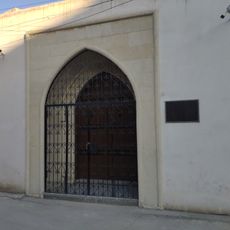
The complex sits in the old city of Mosul and can be reached through several narrow lanes. Reconstruction work is still ongoing, so visitor access may be limited.
A local tradition says the minaret tilted when Prophet Muhammad flew over it, causing the tower to bow in reverence. This legend gave Mosul the nickname 'the hunchback' and made the structure a spiritual symbol.
The community of curious travelers
AroundUs brings together thousands of curated places, local tips, and hidden gems, enriched daily by 90,757 contributors worldwide.