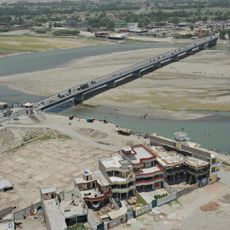
Tapa Shotor, Buddhist monastery near Hadda, Afghanistan.
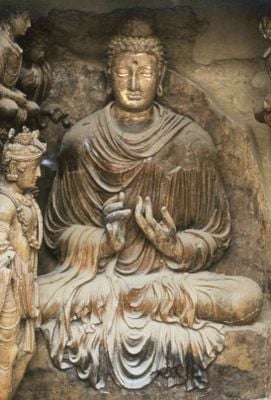
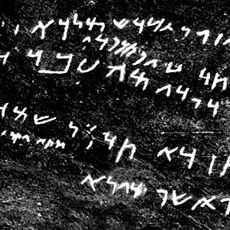
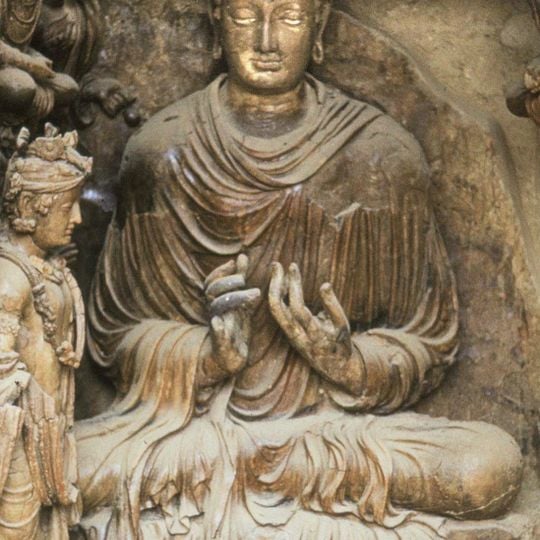
Tapa Shotor is an archaeological site near Hadda containing remnants of a large Buddhist monastery. The location holds clay sculptures and three-dimensional statues along with architectural remains that reveal the substantial scale of this religious complex.
The site's first, pre-monastic phase corresponds to the reign of Indo-Scythian king Azes II (35-12 BCE). The first Buddhist period, under Kushan king Huvishka (155-187 CE), saw the creation of the vihara and niches 1, 2 and 3, and building continued through the Kushans and Kidarites. After a hiatus of about 250 years, restorations were followed by destruction by fire in the 9th century CE; in 1992 the Taliban looted and then set the site on fire.
The sculptures show how Buddhist teachings merged with Greek artistic traditions in this remote corner of Asia. Figures like Herakles and Tyche appear here in a religious context far from their Mediterranean origins.
Visiting requires special permissions due to its location in Nangarhar Province and current security considerations in the region. Travelers should check conditions beforehand and seek local guidance on access and safety.
A local archaeological team uncovered numerous intact sculptures and reliefs here that revealed direct connections between Hellenistic and Indian artistic traditions. These findings showed how far Greek influence actually extended into Central Asia.
The community of curious travelers
AroundUs brings together thousands of curated places, local tips, and hidden gems, enriched daily by 93,575 contributors worldwide.