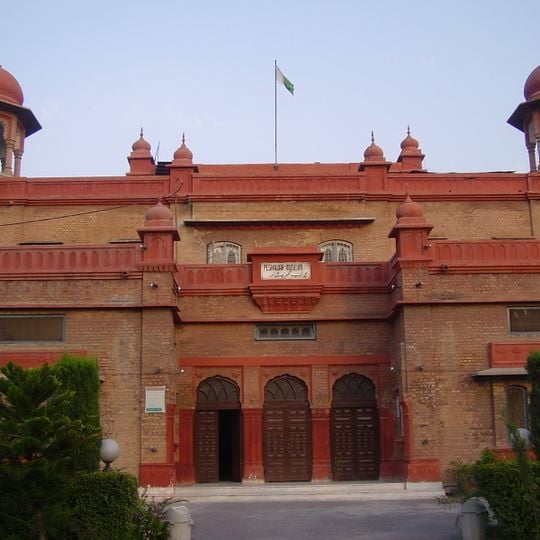
Peshawar Museum, Archaeological museum in Peshawar, Pakistan
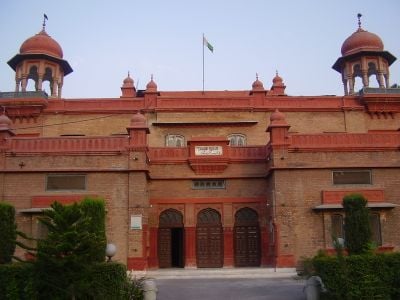
The Peshawar Museum occupies a two-story red brick building with spacious halls, side galleries, and four decorative cupolas at each corner. The exhibition spaces on both floors display Buddhist sculptures, terracotta figures, coins, and objects from archaeological excavations.
The museum was founded in 1907 as Victoria Hall with a single exhibition space funded by local donations and archaeological experts. Over time, the collection grew through discoveries from the region and became an important place for preserving local history.
The collection reflects how trade routes and cultural exchanges connected Greece, Central Asia, and India through art and objects. Visitors see statues and artifacts that show how different civilizations met and influenced each other in this region.
The museum features four exhibition halls, two on each floor, laid out in a way that is easy to navigate and shows different periods. Visitors should allow enough time to view the collections at a comfortable pace and appreciate the details of the objects.
The Kanishka casket, discovered in 1908 at Shah-Ji-Dheri, contained bone fragments of an important Buddhist leader and inscriptions that explain its historical importance. This artifact is one of the museum's most valued collections and shows the connection to the Kushan period.
The community of curious travelers
AroundUs brings together thousands of curated places, local tips, and hidden gems, enriched daily by 60,000 contributors worldwide.