Cerro Ballena, Paleontological site in Caldera, Chile.
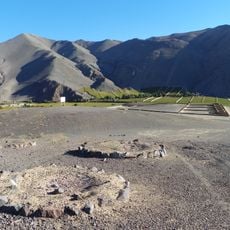
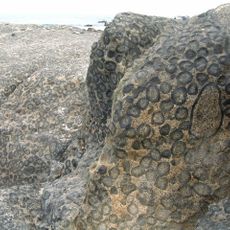
Cerro Ballena is a fossil site in the Bahía Inglesa Formation, a 9-metre-thick layer of fine-grained sandstones exposed in a 20 by 250 metre quarry along the Pan-American Highway north of Caldera. It has yielded more than 40 cetacean skeletons, including 31 baleen whales, along with seals, sailfish, sharks and the aquatic sloth Thalassocnus natans, many preserved in anatomical connection.
Whale remains were first noted in 1965 during construction of Route 5 by the Chilean Army, but the finds were never formally reported and the site's name faded. In 2010, paleontologist Mario Suárez Palacios of the Museo Paleontológico de Caldera and the director of the Museo Regional de Atacama alerted authorities when highway expansion exposed fossils. Excavation led by the Consejo de Monumentos Nacionales with the Smithsonian's Nicholas Pyenson ran from 2010 to 2012, and the site was protected by law in 2012.
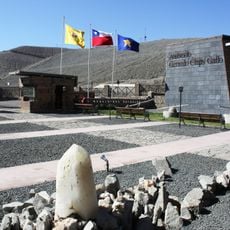
The name "Whale Hill" was given by the residents of Caldera after the 1965 finds, which were never formally reported and faded from memory for over 40 years. The site is now a Bien Nacional, and there are plans to move the Museo Paleontológico de Caldera there to keep the fossils in situ and create a thematic park.
The fossil quarry lies directly beside the Pan-American Highway (Route 5), a few kilometres north of Caldera, and is protected as a national monument, so it cannot be visited as a tourist site. The excavated skeletons were prepared in Chilean and Smithsonian museums, and a project has been proposed to move the Caldera Paleontological Museum to the site to keep the fossils in place.
Scientific evidence suggests that massive algal blooms millions of years ago caused the death of large whale populations. This created the exceptional concentration of skeletons visible at the site today.
The community of curious travelers
AroundUs brings together thousands of curated places, local tips, and hidden gems, enriched daily by 93,000 contributors worldwide.