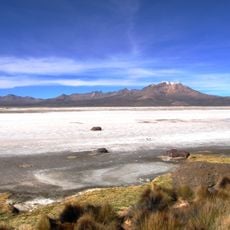
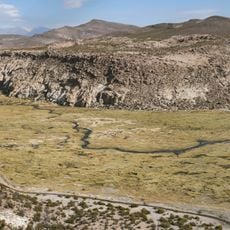
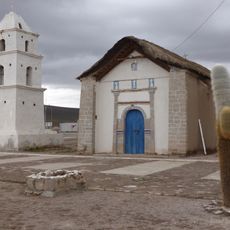
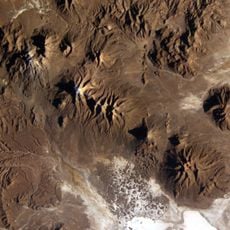
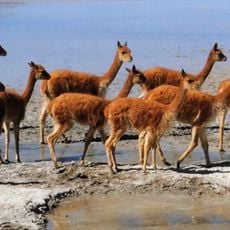
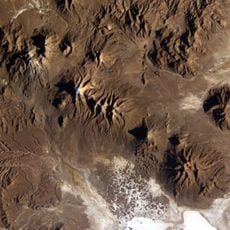
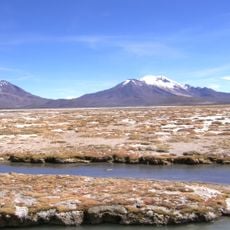
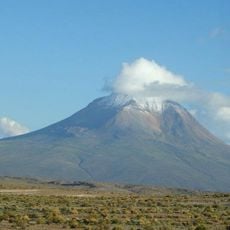
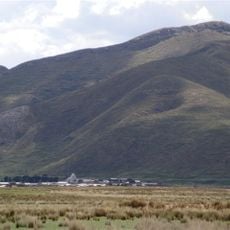
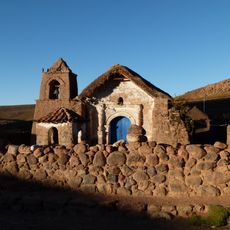
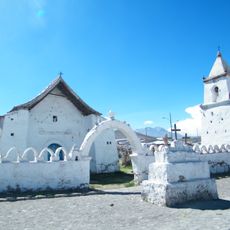
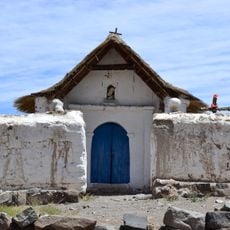
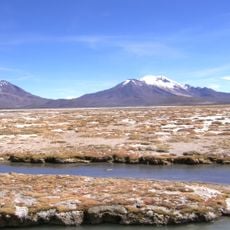
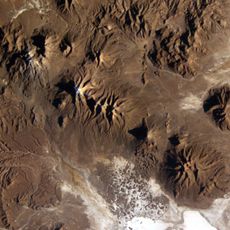
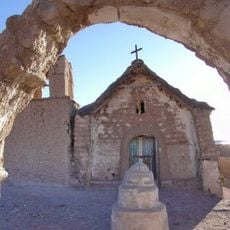
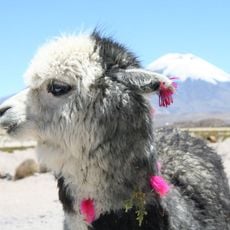
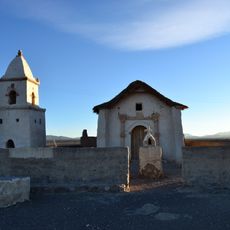
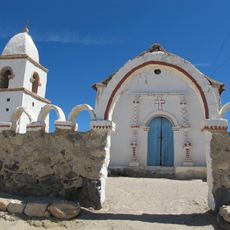
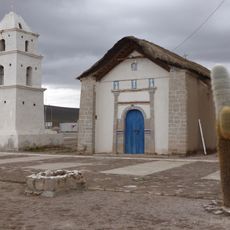
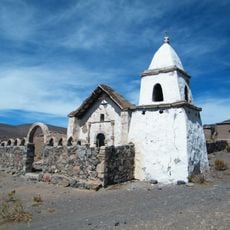
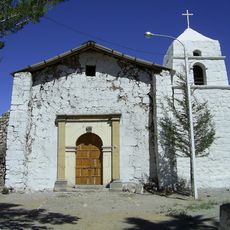
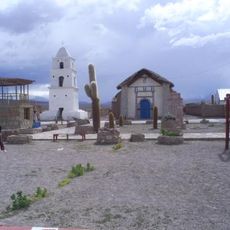
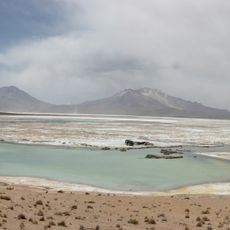
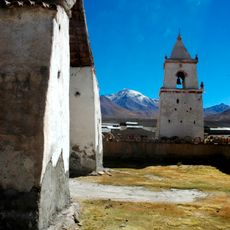
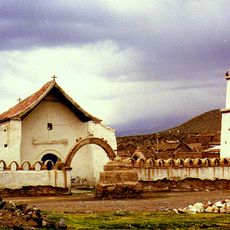
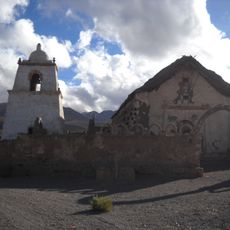
Isluga, Stratovolcano in Colchane, Chile.
Isluga is an elongated stratovolcano in Chile's Tarapacá Region whose summit reaches 5,559 metres. At least three craters lie on a plateau west of the summit, and the active crater is 400 metres wide with steep rims, ringed by volcanic scoria and partly filled with ash and pumice. The edifice covers about 60 square kilometres and consists of lava domes, blocky lava flows, lahars and pyroclastic rocks.
Isluga began forming about half a million years ago during the Pleistocene in several stages. Four major eruptions are recorded for 1863, 1869, 1878 and 1913; the 1878 lava flow destroyed several nearby villages. The last clearly attested eruption was in 1913, though events in 1960 and 2005 remain possible.
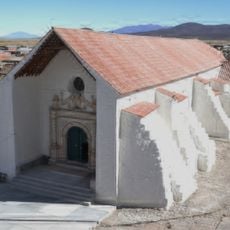
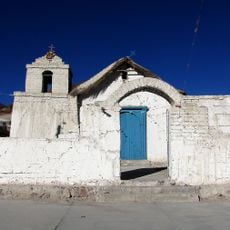
The mountain has religious importance for the Aymara people around it, and archaeological sites lie on its slopes and at its foot. Its Aymara name is given as isi (dress) and llullaña (to deceive), meaning "disguise"; the native names Jiwq'ir qullu (Volcano Hill) and Laram Qawani (Blue Valley) may refer to its physical and spiritual aspects.
Isluga is reached via International Route 55, about 200 km east of Iquique and 5 km from the Bolivian border; the road can be flooded out in bad weather. A trekking route continues to the 5,559 m summit. Watch for sunburn, bad weather, puma encounters and altitude sickness. Park rules ban open fires, drones, noise, alcohol and leaving the trails.
Polylepis trees grow at 4,900 metres on Isluga, forming the highest timberline on Earth. Sulphur was mined in the summit region, with activity attested in 1887, and the deposits were considered of high quality for processing saltpeter.
The community of curious travelers
AroundUs brings together thousands of curated places, local tips, and hidden gems, enriched daily by 93,665 contributors worldwide.