صومعه شخموراد, Medieval monastery in Tsaghkavan, Armenia
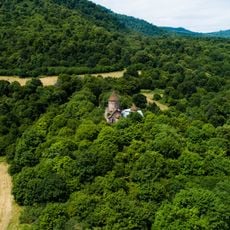
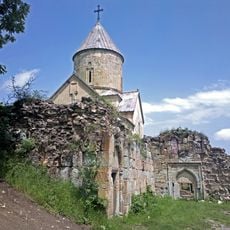
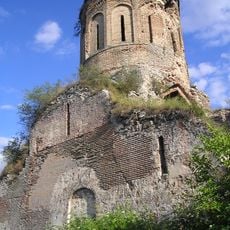
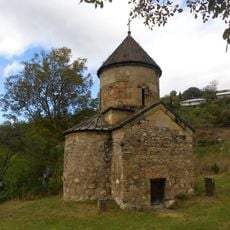
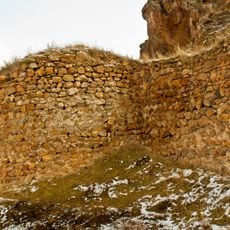
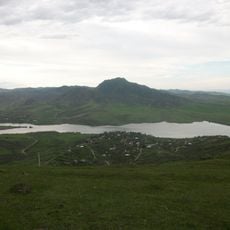
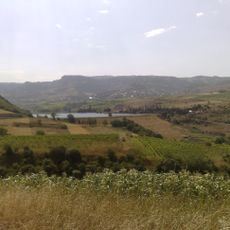
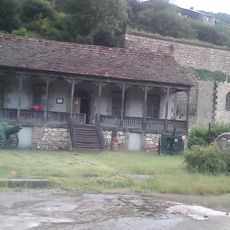
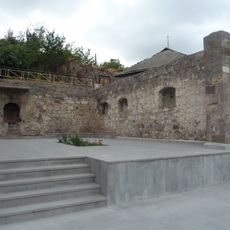
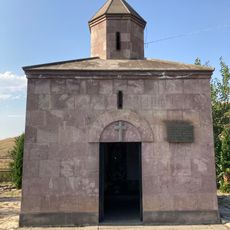
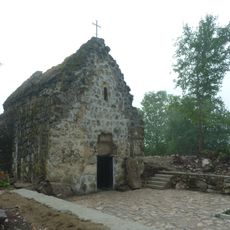
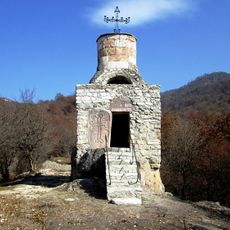
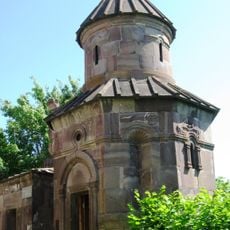
Shkhmurad Monastery stands on a narrow flat strip above the left bank of the Varagajur (Hakhum) river, 6–7 km southwest of Tsaghkavan. Its four adjoining structures are the Church of the Holy Mother of God (8.3 m long, 6.55 m wide, walls 65–70 cm thick), a gavit to its south, a jamatun to its west, and the rough-stone, lime-plastered building called Khoranik. Master Grigor built the church apse.
The complex was built in the 12th–13th centuries on a narrow terrace above the left bank of the Varagajur (Hakhum) river, 6–7 km southwest of Tsaghkavan. Its inscriptions name the church Astvatsatsin, and the altar was made by the master Grigor. Shkhmurad served as a cultural and educational centre and a pilgrimage site for the villages of the river's upper and middle course. Prince Sador, son of Artsruni, lord of Kayen and Mahkanaberd, is mentioned in connection with the site.
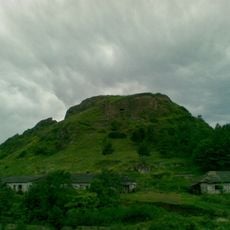
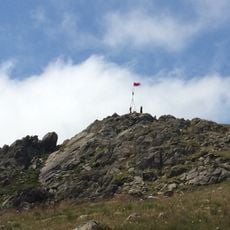
The monastery's name comes not from the church but from the ruined fortress on the slope to its east, called Shkhmurad or Khaznakar, and from the vanished settlement around it. Inscriptions in the monastery itself call it Astvatsatsin (Mother of God). It was a pilgrimage site and cultural centre for villages of the upper and middle Varagajur (Akhum) valley.
To reach the monastery, you need to travel to Tsaghkavan and follow a mountain path upward, so sturdy footwear and attention to weather are important. Allow time for the journey and check conditions before you go.
The prominent khachkar stands on the southwest arched facade of the church, not inside it. The altar was built by the master Grigor, and three inscriptions in the monastery's stone carvings call the church not Shkhmurad but Astvatsatsin (Mother of God).
The community of curious travelers
AroundUs brings together thousands of curated places, local tips, and hidden gems, enriched daily by 92,922 contributors worldwide.