Kaptavank, Medieval monastery in Chinchin, Armenia
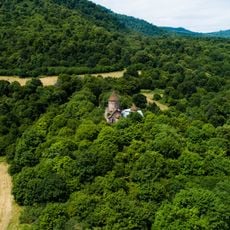
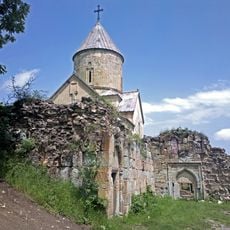
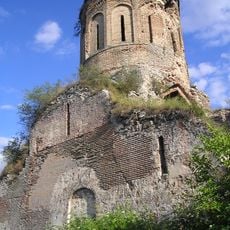
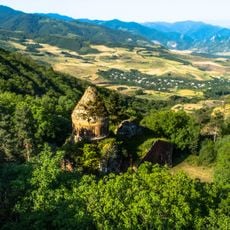
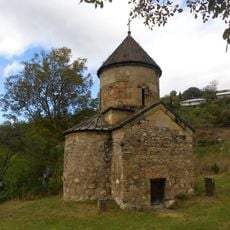
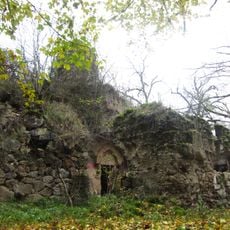
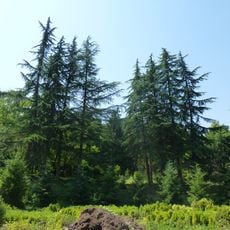
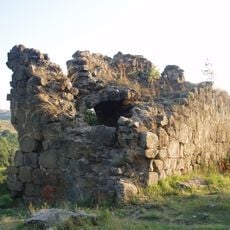
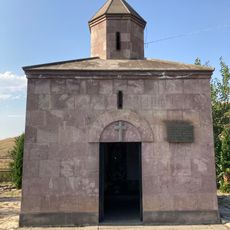
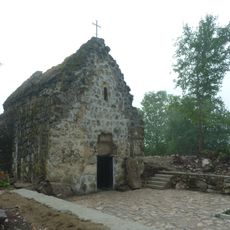
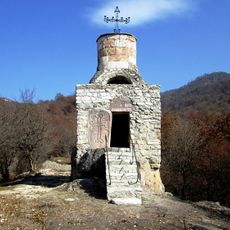
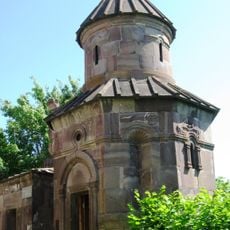
Kaptavank is a small monastic church built of blue basalt blocks set with lime mortar, standing in a forest clearing at 1,378 metres on the right bank of the Hakhum stream. Its exterior is an elongated rectangle 11.4 by 9.46 metres, while the interior is cross-shaped, with four small side chapels at the corners carrying the weight of an eight-sided dome. The walls, 0.8 to 1.07 metres thick, have two entrances, on the west and south sides, and only narrow slit windows, so the interior stays dim.
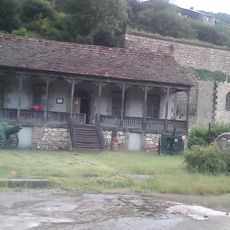
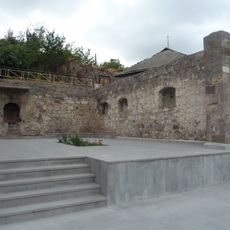
According to an inscription on the eastern wall, the monastery was built in the mid-12th century and consecrated in 1151. It was once protected by high walls, with a small settlement beside it. Nine votive inscriptions from 1234–1243 survive on the walls; one of them, from 1242–1243, holds the earliest known mention of the word "gorg" (carpet).
The monastery displays numerous khachkars carved with geometric patterns and animal figures, including one fragment showing two intertwined birds. These stone crosses represent a local artistic tradition that still defines the site's character today.
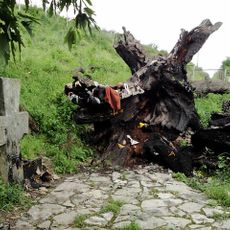
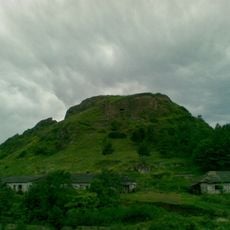
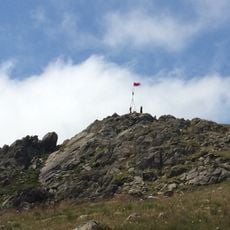
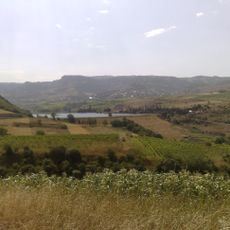
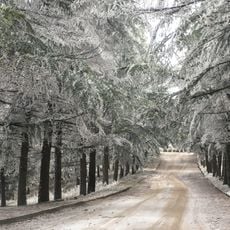
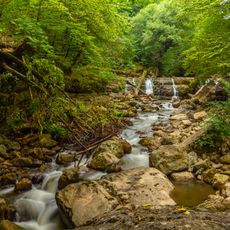
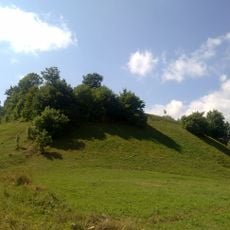
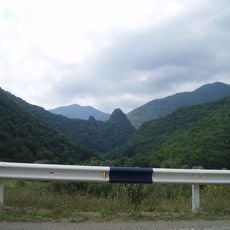
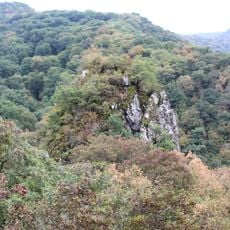
The site sits about 5 kilometers southwest of Chinchin village in mountainous terrain. Visitors should expect uneven ground with ravines and wooded areas, so sturdy footwear is recommended.
The name Kaptavank comes from the bluish basalt of its walls, not from limestone. The church has no carved ornament at all; the only contrast is the cornice under the dome's pointed roof and the top row of drum stones, cut from pink tufa.
The community of curious travelers
AroundUs brings together thousands of curated places, local tips, and hidden gems, enriched daily by 92,694 contributors worldwide.