Tsrvizi monastery, Armenian monastery in Lusahovit, Tavush Province, Armenia
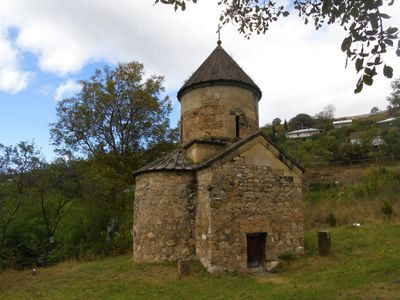
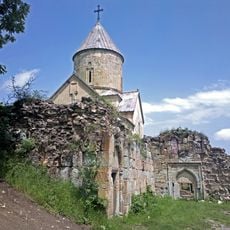
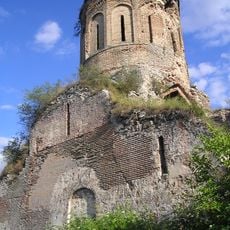
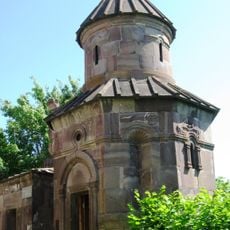
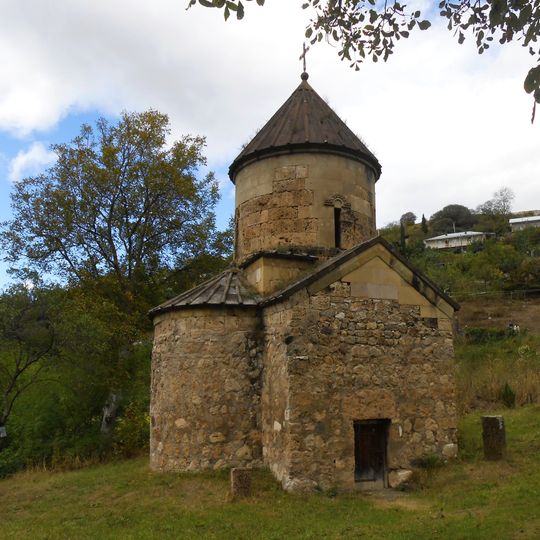
Tsrvizi monastery is a medieval religious complex made of stone with several buildings featuring pointed domes and traditional Armenian architectural elements crafted from volcanic tuff and basalt. The complex displays the building methods of its time, with rough stones that reflect the natural beauty of the mountain landscape.
Tsrvizi monastery's church was built in the 5th century from cut grey basalt and lime mortar; its dome-bearing arches, vaults and dome were rebuilt in the 6th–7th centuries. An inscription records that King George III of Georgia (r. 1156–1184) freed the monastery from taxes. Prince Ivane Zakarian and his sister Nanan restored the dome and roof in 1197, and in 1213 Ivane and Zakare Zakarian renewed the monastery again.
The monastery walls display khachkars, carved stone crosses that combine Armenian religious symbols with geometric patterns and biblical figures. These crosses show the artistic traditions of the region and how faith was expressed in stone.
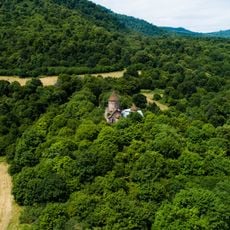
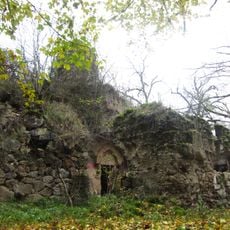
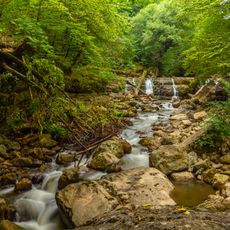
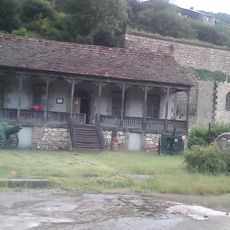
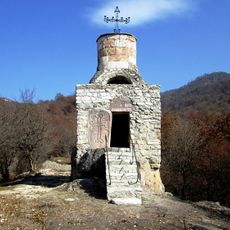
The chapel stands on the right bank of a small gorge southwest of Lusahovit, the village formerly called Tsrviz. The surrounding ground is grassy and uneven, with the ruined medieval settlement and its khachkars nearby. Approach on foot from the village and allow time for the rough terrain.
The most valuable inscription is on the dome of the north apse of the Holy Mother of God church: it records that Prince Kurd Artsruni, lord of Mahkanaberd and patron of the monastery, freed it from all taxes in 1177–78, and that King George III of Georgia confirmed the ruling.
The community of curious travelers
AroundUs brings together thousands of curated places, local tips, and hidden gems, enriched daily by 92,641 contributors worldwide.