Khoranashat, Medieval monastery in Chinari, Armenia
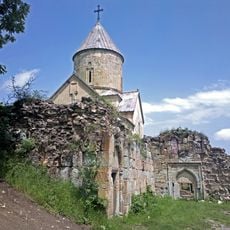
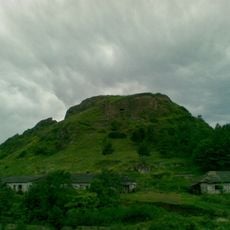
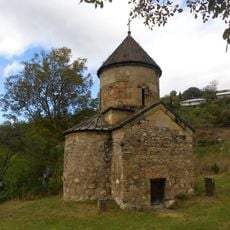
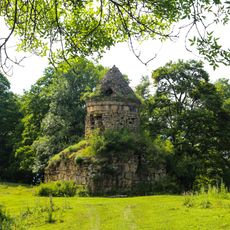
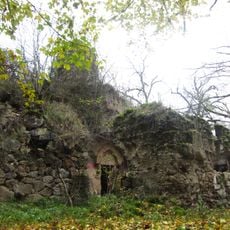
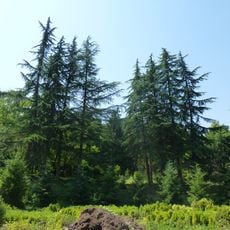
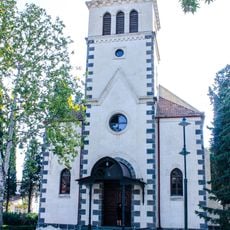
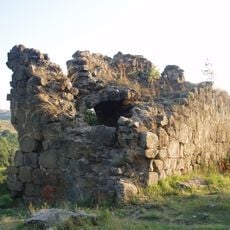
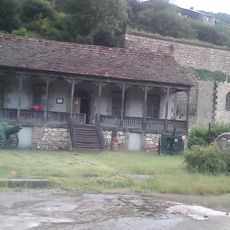
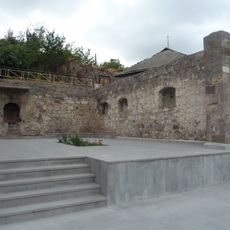
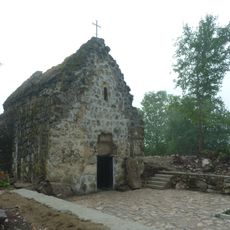
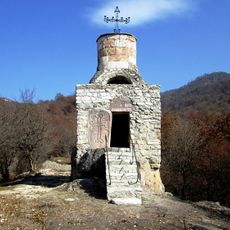
Khoranashat is a monastery complex on the western slope of a forested mountain 2.5 km northeast of Chinari. Its main church, Surb Astvatsatsin, is a domed hall measuring 12.7 by 11 metres, with a cross-shaped interior and two-storey side chambers. The complex also includes the churches of Surb Kiraki and Surb Chgnavor, a gavit and auxiliary buildings.
The monastery was built between 1211 and 1251 under the guidance of Vardapet Vanakan and served as a center for manuscript production and religious learning. Its construction over several decades reflects the gradual development of this important religious site.
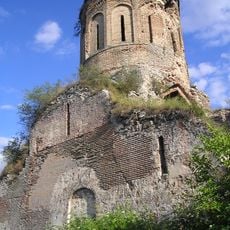
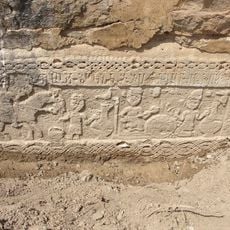
The main church displays traditional Armenian building features including an octagonal drum, conical dome, and detailed stonework. These design choices were common across religious structures of the region and remain visible today.
Khoranashat stands about 100 metres from the Azerbaijan border, and the last 1,500 metres of the road from Chinari must be walked at a crouch to stay out of the opponent's line of sight. The road was improved in 2019 after two new border positions were taken. The church doors are usually locked; they open each 2 May for a liturgy attended by residents of Chinari, Aygedzor and Artsvaberd.
A Gospel once copied at Khoranashat, apparently produced in ancient Artsakh-Utiq, contains a version of the Last Supper with no known parallel; it is now kept in Halle, Germany. The historian Kirakos Gandzaketsi lived in the monastery between 1215 and 1225 and left with Vanakan Vardapet when troops of the Khwarazmshah Jalal al-Din invaded.
The community of curious travelers
AroundUs brings together thousands of curated places, local tips, and hidden gems, enriched daily by 94,354 contributors worldwide.