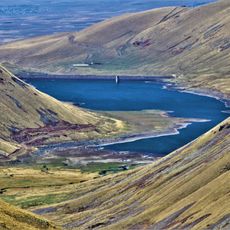
Lake Kari, High-altitude lake on Mount Aragats, Aragatsotn Region, Armenia.
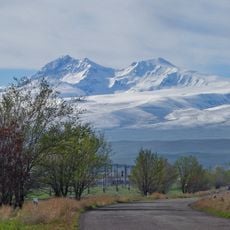
Lake Kari is a high-altitude lake on the slopes of Mount Aragats at 3,207 m, formed in a glacial cirque and held back by moraine deposits. Its surface covers 30 hectares, its shoreline runs 1,150 m, and it reaches 8 m at its deepest. A meteorological station stands on the eastern shore, and the Arkashen river flows out from the western shore.
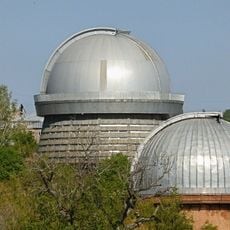
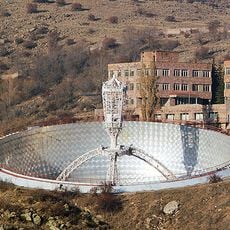
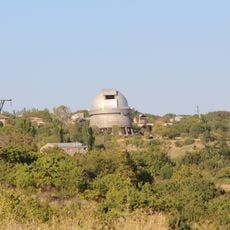
Lake Kari is a glacial lake formed after the retreat of the last Quaternary glacier about 9,000 years ago, when meltwater filled a cirque hollowed out on the slopes of Mount Aragats. Its natural dams are moraine deposits left by the moving ice. In 1942 Artem and Abraham Alikhanyan founded a cosmic-ray station on the southern shore; a concrete wall later closed the lake's southern outflow to secure its water supply.
The lake's name means "stone" in Armenian, from old beliefs that stone rivers, called kurums, feed it. On the south shore stands the cosmic ray station founded in 1942 by physicists Artem Alikhanyan and Abraham Alikhanov, which gave the lake its scientific role. A concrete wall closed the southern outflow to supply the station, raising the water level.
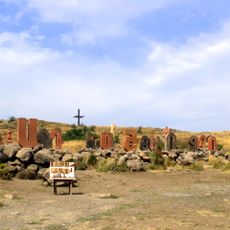
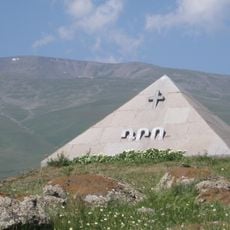
Access to Lake Kari is typically available through roads from Agarak village and a route connecting to the Armenian alphabet monument, though these roads remain closed during winter due to heavy snowfall that can persist into late May, making travel highly seasonal.
The lake remains frozen for approximately eight to nine months each year due to its extreme elevation, and despite the artificial introduction of Sevan trout in 1963, the fish displayed faster growth rates than their counterparts in Lake Sevan, revealing notable ecological adaptations.
The community of curious travelers
AroundUs brings together thousands of curated places, local tips, and hidden gems, enriched daily by 93,133 contributors worldwide.