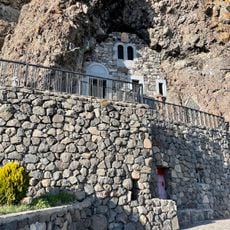
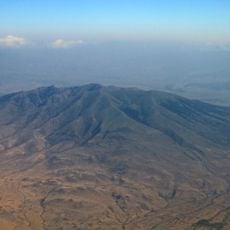
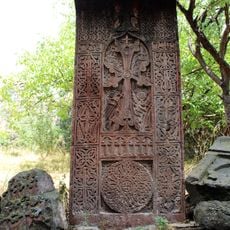
Կարենիսի վանք, Medieval monastery in Karenis, Armenia.
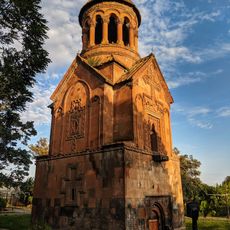
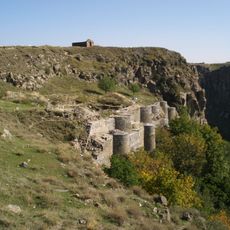
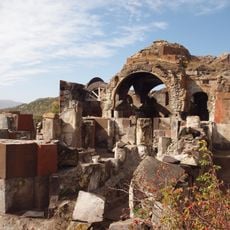
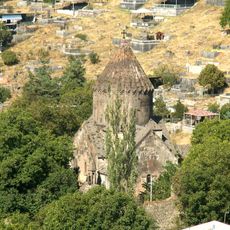
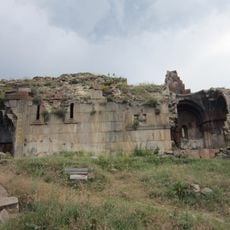
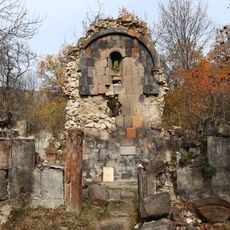
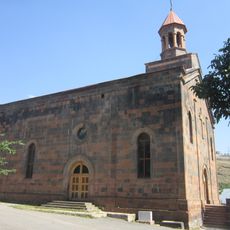
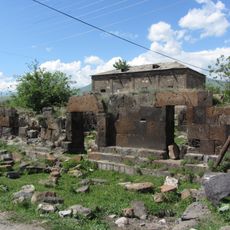
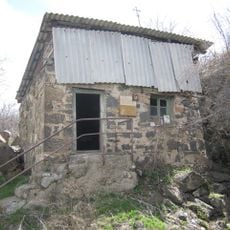
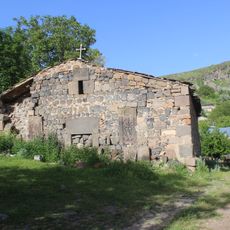
Karenis Monastery stands in the Hrazdan gorge in Karenis village, Kotayk Province, north of the Gyumush hydroelectric plant. Of the complex, a 7th-century single-nave vaulted church and a late medieval gavit attached on the west survive. The church, 4.90 by 7.70 m, is built of smoothly cut local red tuff and ends in a slightly horseshoe-shaped apse; a small vaulted burial chamber lies beneath the prayer hall floor.
The church is a 7th-century single-nave vaulted hall that kept its original volume and plan intact. In the early 17th century, under Catholicos Melikset, Catholic visitors took the relics of the Apostle Andrew from the monastery. The gavit was added in the late Middle Ages; a khachkar of 1567 is set into one of its piers. In that period the monastery owned three mills in Karenis, a garden and an oil press in Oshakan.
The monastery is also called Arakelots, after the apostles Matthew and Andrew, whose relics were kept in a niche beneath the altar; in the early 17th century Catholics seized Andrew's relics. One cross-stone built into a gallery pier is dated 1567. In the late Middle Ages the monastery owned three mills in Karenis and an oil press in Oshakan.
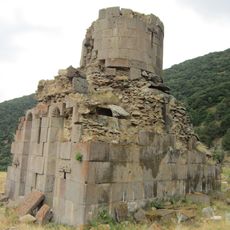
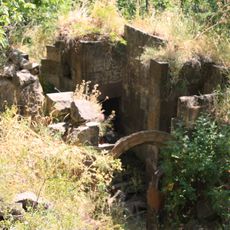
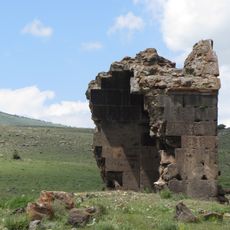
The monastery stands in the Hrazdan gorge north of the Gyumush hydroelectric plant, in Karenis village, Kotayk Province. The church and its adjoining gavit are the only surviving structures, and the gavit roof and the upper parts of its west and south walls are damaged. The site is reached on foot over uneven ground.
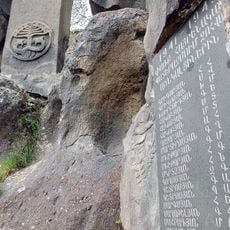
The 1567 khachkar built into one of the gavit's piers is not the only reused stone: the gavit walls also contain 15th–16th-century tombstones. The church itself, a small single-nave hall measuring 4.90 by 7.70 m, keeps its original 7th-century volume intact.
The community of curious travelers
AroundUs brings together thousands of curated places, local tips, and hidden gems, enriched daily by 92,806 contributors worldwide.