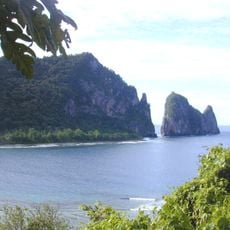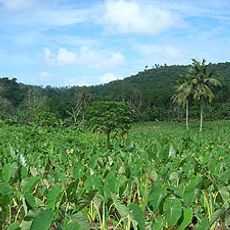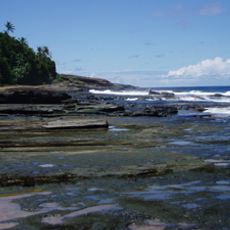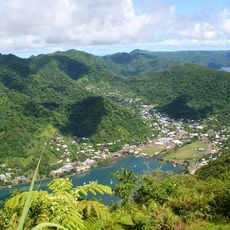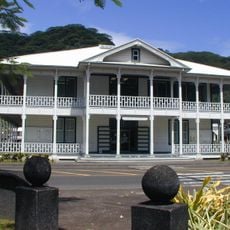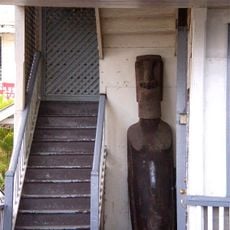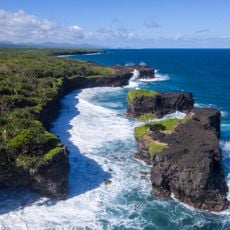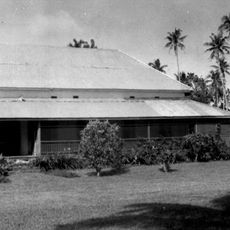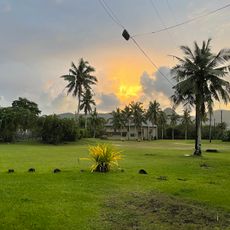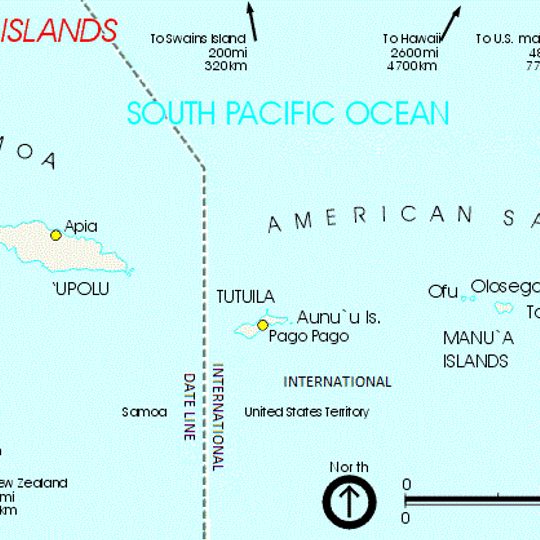
Samoan Islands, Tropical archipelago in South Pacific Ocean, American Samoa.
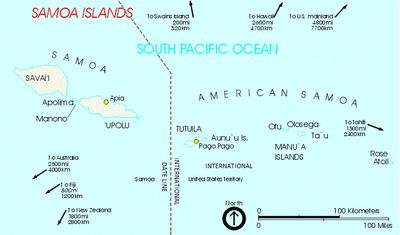
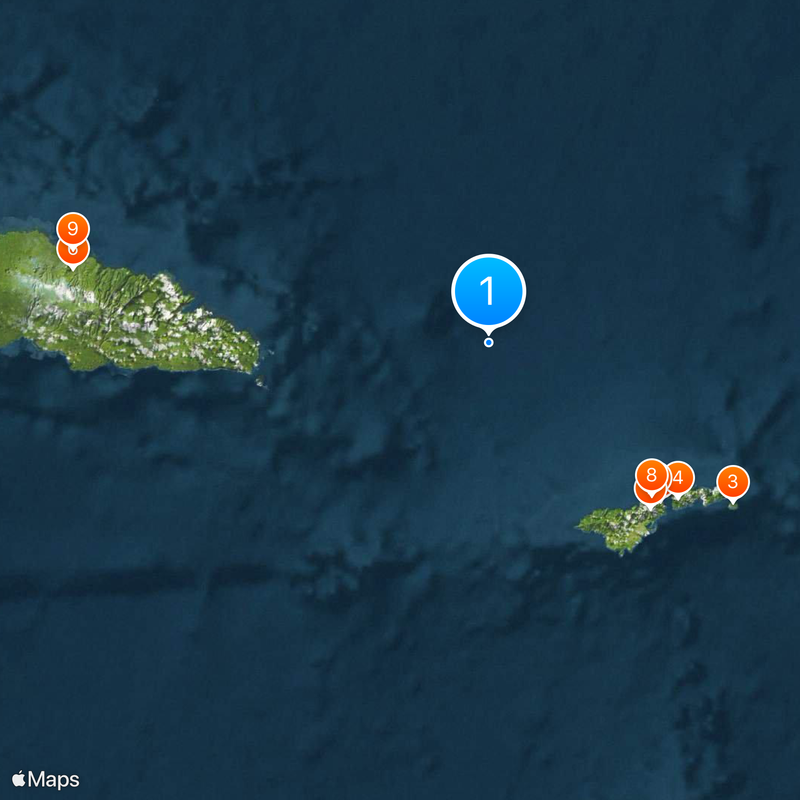
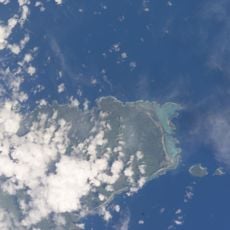
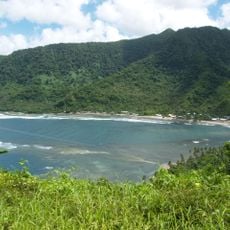
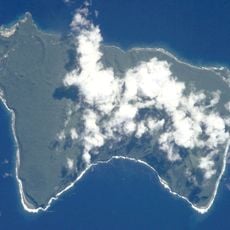
The Samoan Islands lie in the southern Pacific and consist of two large islands, Savai'i and Upolu, along with several smaller inhabited areas. These land masses rise from the ocean and together form an area of over 3,000 square kilometers (roughly 1,160 square miles).
The Lapita peoples reached these islands roughly 3,500 years ago and laid the foundations for the Polynesian population and its way of life. Over the centuries this developed into a distinct society with established traditions.
The fa'amatai tradition structures social life through a system of chiefs who make decisions about family matters and communal land. This form of organisation still shapes daily life in villages and appears in public gatherings.
The tropical climate brings mild temperatures all year, with more rain falling between November and April. Avoiding these months gives drier conditions with similarly warm weather.
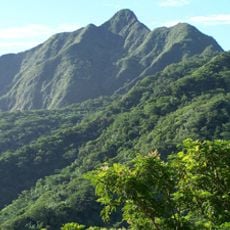
Mount Silisili on Savai'i rises to 1,858 meters (approximately 6,096 feet) and ranks among the highest points in Polynesia. This volcanic peak towers well above most other summits in the region.
The community of curious travelers
AroundUs brings together thousands of curated places, local tips, and hidden gems, enriched daily by 60,000 contributors worldwide.