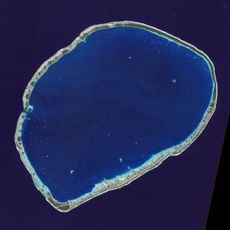
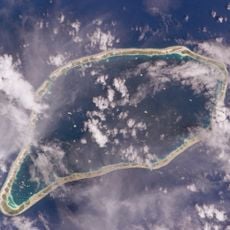
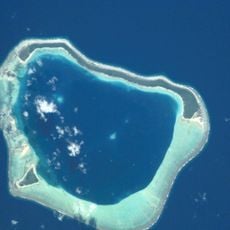
Starbuck Island, Coral atoll in Line Islands, Kiribati
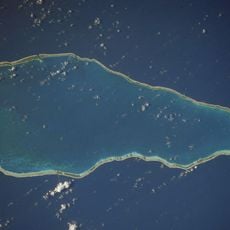
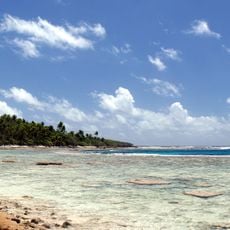
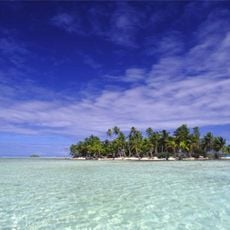
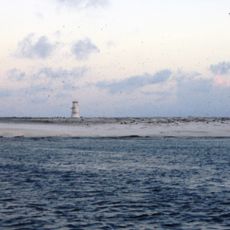
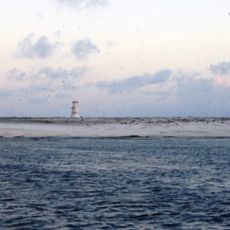
Starbuck Island is a small coral atoll in the Line Islands that consists of flat land strips around an inner lagoon. The entire area lies just a few meters above sea level and shows white sand between low palms and scrub.
James Henderson of the East India Company ship Hercules sighted the island in 1819; Obed Starbuck, captain of the Nantucket whaler Hero, saw it on 5 September 1823. Phosphate was mined from 1870 to 1893, after Britain took possession in 1866 under Commodore Swinburn of HMS Mutine. The island joined Kiribati in 1979, when the Treaty of Tarawa vacated American claims.
The name comes from Obed Starbuck, captain of the Nantucket whaler Hero, who sighted the island on 5 September 1823; his cousin Valentine, master of the British whaler L'Aigle, was the first non-Pacific Islander known to have landed. The island's other names include Barren, Coral Queen, Hero, Low, Starve and Volunteer Island.
Starbuck Island is a wildlife sanctuary, so landing is restricted and access is by boat only, with no harbour, freshwater or shelter on site. The surrounding reefs are dangerous and have wrecked ships; the hypersaline lagoons on the eastern side dry up and their salty mud is hazardous to cross. The island lies about 620 km south of the equator and receives only around 800 mm of rain a year.
Starbuck's 1.5 million pairs of sooty terns make it one of the world's largest colonies of the species; some counts reach three to six million birds. The island also holds Bidens kiribatiensis, possibly the only plant endemic to the entire Line Islands.
The community of curious travelers
AroundUs brings together thousands of curated places, local tips, and hidden gems, enriched daily by 92,568 contributors worldwide.