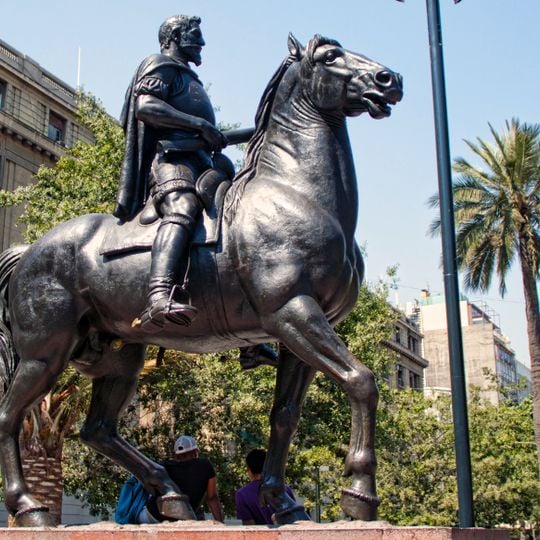
Equestrian statue of Pedro de Valdivia, Bronze equestrian monument in Plaza de Armas, Santiago, Chile.
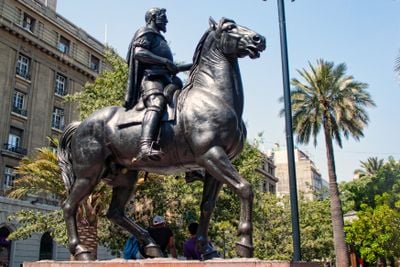
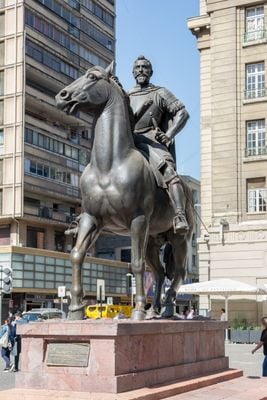
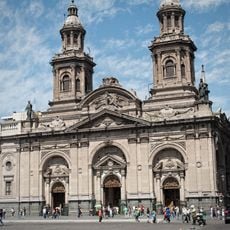
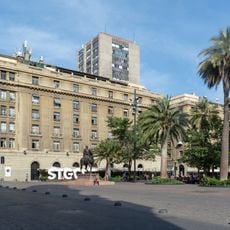
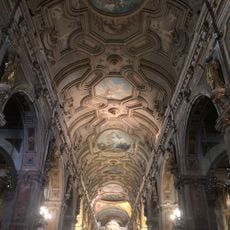
The Equestrian statue of Pedro de Valdivia is a dark bronze group of the conquistador seated upright on a horse, set on a low stone plinth at the northeast corner of Plaza de Armas, facing the Cathedral. The rider wears body armor, a ruffled collar and tall boots, holding reins and a short baton or sword hilt; the horse stands with all four hooves planted and its mouth open. The bronze has a weathered greenish-brown patina.
Spanish sculptor Enrique Pérez Comendador created this bronze work in 1963 to honor the founder of Santiago, the conquistador Pedro de Valdivia. Valdivia had established the city in 1541, marking the beginning of Spanish settlement and control in that region.
The monument sits at the heart of Plaza de Armas and is passed by visitors, commuters, and tourists daily, making it a natural gathering point. The statue represents a contested chapter of Santiago's founding for many Chileans, yet it remains a reference in the city's rhythm.
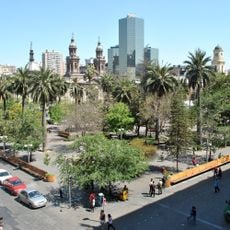
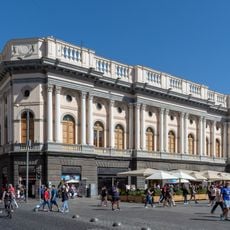
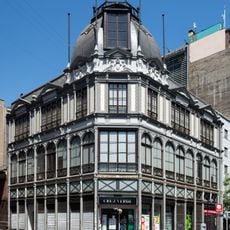
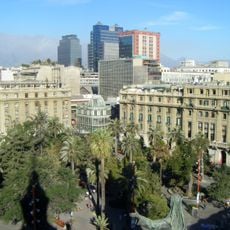
The monument sits in the center of Plaza de Armas, Santiago's historic main square, and is easy to reach on foot from various streets. The square is open and can be visited during day and evening hours, with the surroundings full of cafes, restaurants, and shops.
On 22 April 1973 the first LGBT demonstration in Chile took place at the spot where the statue stands. The bronze was cast from cannon metal from Spanish warships, donated by Chile's Spanish community for the 150th anniversary of independence. Until 1999 the rider faced east; after a controversy he was turned toward the Cathedral.
The community of curious travelers
AroundUs brings together thousands of curated places, local tips, and hidden gems, enriched daily by 92,720 contributors worldwide.