Posada del Corregidor, Colonial building in Santiago, Chile
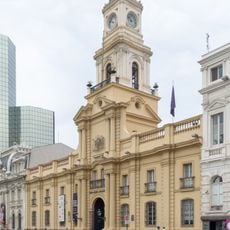
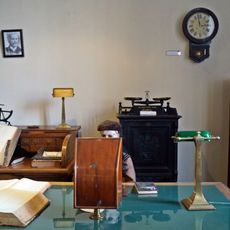
Posada del Corregidor is a two-story colonial building defined by its protruding wooden balcony with carved corbels and adobe walls. The structure displays typical features of that era's architecture with rustic details and sits at an important corner in the historic center.
Built between 1750 and 1765, the house was known in the 19th century as La Filarmónica after a ballroom opened there in 1830. Darío Zañartu bought it in 1926 (1928 in some accounts) and named it after corregidor Luis Manuel de Zañartu, unrelated to the building. It was a bohemian bar and dance venue in the 1930s and 1940s, was restored after Banco del Trabajo acquired it in 1979, and was declared a National Historic Monument in 1970.
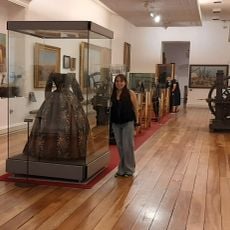
The name comes from Darío Zañartu, who bought the house in 1928 and named it after corregidor Luis Manuel de Zañartu, to whom it has no link. In the 19th century it was called La Filarmónica for the ballroom installed in 1830, and in the 1930s and 1940s it housed a bar and dance halls at the centre of Santiago's bohemian life. Since 1985 the municipality has run it as a cultural centre for traditional customs, with art exhibitions and literary meetings.
The building stands at the corner of Corregidor Zañartu and Esmeralda streets in downtown Santiago, a few blocks from the Plaza de Armas. Its second floor was left unusable by the 2010 earthquake, and restoration work begun in late 2012 added a literary café and an underground art room. Check locally before visiting, since the building opens as a municipal cultural centre rather than as a museum.
The name comes from Darío Zañartu, who bought the house in 1928 and renamed it after corregidor Luis Manuel de Zañartu, to whom the building has no documented link. He also lobbied the municipality to create the adjoining square and its fountain.
The community of curious travelers
AroundUs brings together thousands of curated places, local tips, and hidden gems, enriched daily by 92,788 contributors worldwide.