Museum of Memory and Human Rights, Human rights museum in Santiago, Chile
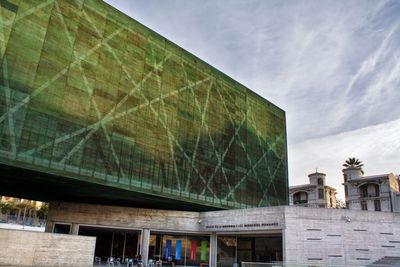
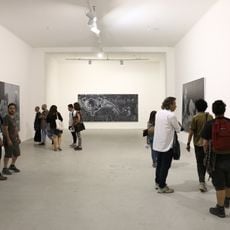
The Museum of Memory and Human Rights is a history museum in Santiago commune, Chile, documenting events during the military dictatorship between 1973 and 1990. The building spans five floors with exhibition rooms holding photographs, videos, and personal testimonies from victims and their families. Its facade combines green panels and white ribbed cladding around a recessed glass entrance.
The institution opened in 2010 under President Michelle Bachelet's government as part of Chile's bicentennial celebrations and the national reconciliation process. Its foundation followed decades of debate about addressing violence during military rule that began in 1973.
The museum's name and mission tie it to commemorating victims of human rights violations under Augusto Pinochet's dictatorship (1973–1990). Its collection, largely donated by the organization Casa de la Memoria in 2009, holds torture devices, letters written by prisoners to their families, newspaper clippings and survivor testimony. A documentation centre and digital library support research.
The museum occupies the northwest corner of Matucana Avenue and Catedral Street, in the Yungay neighbourhood, opposite Quinta Normal metro station on Line 5. Entry is by a ramp from the plaza or by stairs on Matucana and Chacabuco streets. The building covers 10,900 m², with parking lots added on site.
The entrance displays the final poem by Víctor Jara, written at Estadio Chile shortly before his death in 1973. The text is engraved on a wall and remembers the singer and activist who was detained during the first days of the regime.
The community of curious travelers
AroundUs brings together thousands of curated places, local tips, and hidden gems, enriched daily by 92,611 contributors worldwide.