Chilean National Museum of Natural History, National museum in Santiago, Chile
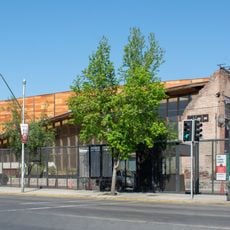
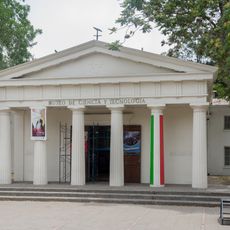
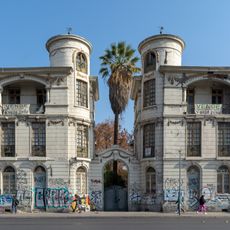
The Chilean National Museum of Natural History is a nationwide natural history museum in Quinta Normal Park in Santiago that exhibits animals, plants, and rocks from the country. The building offers several large exhibition rooms spread across a ground floor and an upper floor, with access to an attached library.
The museum was founded on 14 September 1830 by the French naturalist Claudio Gay, commissioned by the Chilean government; an earlier 1822 appointment of Jean-Joseph Dauxion-Lavaysse as founding director came to nothing. It opened to the public in 1838 in a room of the National Library building. The present building was erected in 1875 as a pavilion for the Chilean International Exhibition, and earthquakes in 1906, 1927 and 2010 damaged it, the last keeping it closed until 2012.
Chileans call it the "whale museum" for the 17-metre sei whale skeleton hanging in the central hall. The anthropology rooms hold the world's largest public collection of rongorongo tablets from Easter Island, and the Chinchorro mummies, about 7,400 years old, are roughly two millennia older than Egyptian examples.
The entrance is on Matucana street, which runs along the western side of the park and is easy to reach by public transport or on foot. Inside, display cases and corridors are mostly wide enough for groups and wheelchairs, though in older sections there are narrower passages or steps.
In a side wing researchers work on digitizing dried plants from the national herbarium, securing them for future generations. Through glass panels visitors sometimes see the equipment and tables where this quiet process takes place.
The community of curious travelers
AroundUs brings together thousands of curated places, local tips, and hidden gems, enriched daily by 92,609 contributors worldwide.