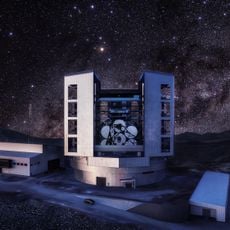
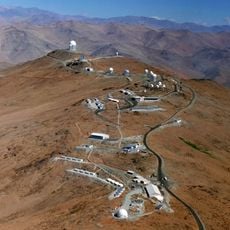
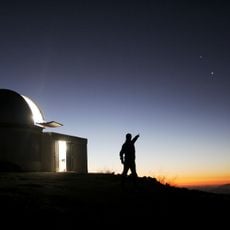
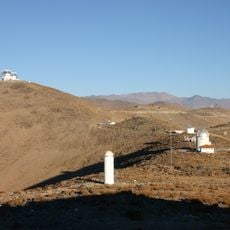
Leonhard Euler Telescope, Reflecting telescope at La Silla Observatory, Chile
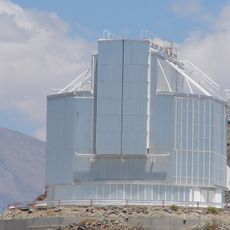
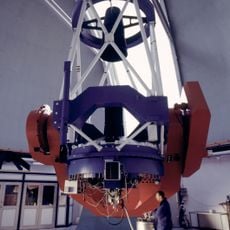
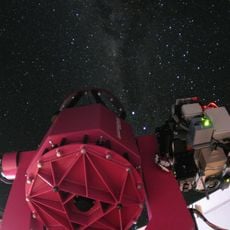
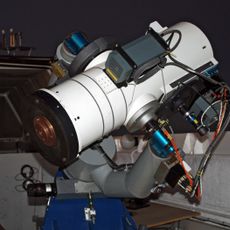
The Leonhard Euler Telescope is a fully automatic 1.2-metre reflecting telescope built and operated by the Geneva Observatory at ESO's La Silla site, 2,375 m up in Chile's Norte Chico region. Its CORALIE echelle spectrograph, a copy of the ELODIE instrument, measures stellar radial velocities, and a smaller piggyback telescope called Pisco is mounted alongside.
The telescope saw first light on 12 April 1998 and is operated by the Geneva Observatory. Its first discovery was a hot Jupiter around Gliese 86, with an orbital period of 15.8 days and about four times Jupiter's mass. It later joined the Mercator Telescope in the Southern Sky extrasolar Planet search Programme and has been used for follow-up work on SuperWASP finds.
The telescope is named after the Swiss mathematician Leonhard Paul Euler, and its name is shared with the CORALIE spectrograph, a copy of the ELODIE instrument with which Michel Mayor and Didier Queloz detected the first planet around a Sun-like star. CORALIE was built and installed at the telescope in April 1998, and in 2007 Didier Queloz and his team upgraded it to support SuperWASP and the Next-Generation Transit Survey.
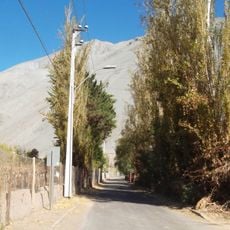
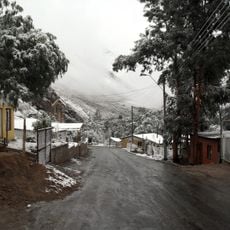
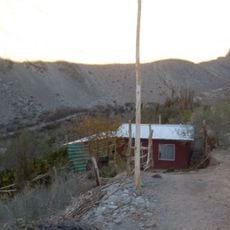
The observatory sits at high altitude in Chile's arid Andes, where clear air conditions are excellent for precise astronomical observations. The remote location requires planning to reach, but offers minimal light pollution and favorable sky conditions.
The telescope carries a small piggyback-mounted instrument called "Pisco" alongside its main optics. CORALIE, its spectrograph, is a copy of the ELODIE instrument that Michel Mayor and Didier Queloz used to detect a planet orbiting a star, and it was upgraded in 2007 by Queloz's team for the SuperWASP and Next-Generation Transit Survey programmes.
The community of curious travelers
AroundUs brings together thousands of curated places, local tips, and hidden gems, enriched daily by 92,669 contributors worldwide.