Magellan Telescopes, Optical observatory in the Atacama Region, Chile
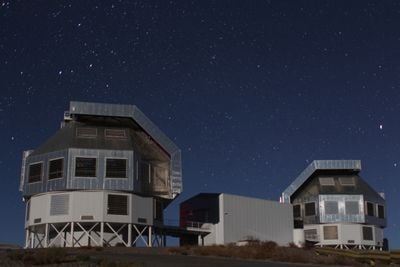
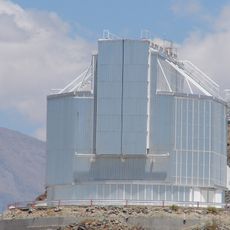
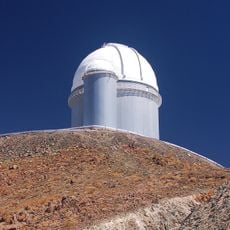
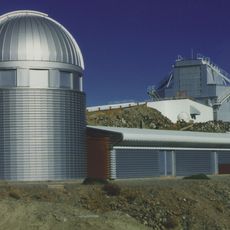
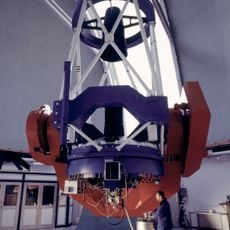
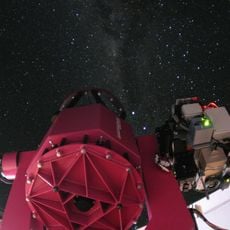
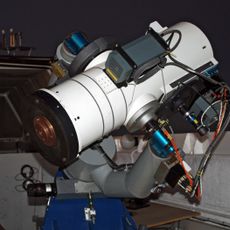
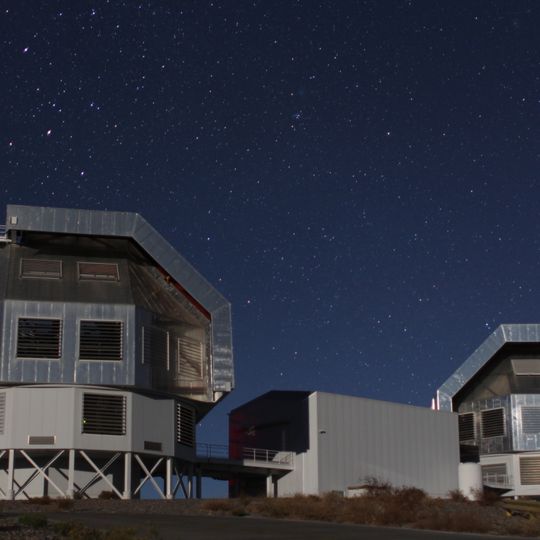
The Magellan Telescopes are a pair of 6.5-metre optical telescopes at Las Campanas Observatory in Chile's Atacama Region, named Baade and Clay. Baade saw first light on 15 September 2000 and Clay on 7 September 2002. The twin instruments were built and are run by the Carnegie Institution for Science, the University of Arizona, Harvard, the University of Michigan and MIT.
The first telescope, Baade, began operating in 2000, and the second, Clay, followed two years later. Both were built by a consortium of American universities led by the Carnegie Institution for Science and remain in active use today.
The name Magellan honours the 16th-century Portuguese explorer Ferdinand Magellan, while the individual telescopes carry the names of astronomer Walter Baade and philanthropist Landon T. Clay. The Clay telescope's adaptive secondary mirror, MagAO, was rebuilt from a mirror damaged before installation on the Large Binocular Telescope and now yields visible-light images resolving 0.02 arcseconds.
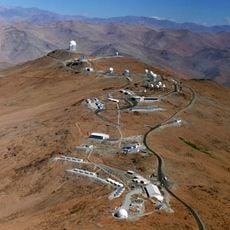
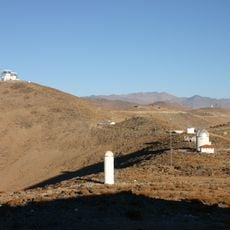
The site sits at high elevation where the air is noticeably thinner than at sea level, so visitors should give themselves time to adjust before walking around. Warm layers are a good idea, as temperatures can drop quickly even when the sun is out.
One of the instruments fitted to these telescopes, the IMACS spectrograph, can observe hundreds of stars or galaxies at the same time in a single night. This ability to capture many objects at once makes the facility especially useful for large-scale surveys of the night sky.
The community of curious travelers
AroundUs brings together thousands of curated places, local tips, and hidden gems, enriched daily by 92,647 contributors worldwide.