TRAPPIST, Robotic telescope at La Silla Observatory, Chile
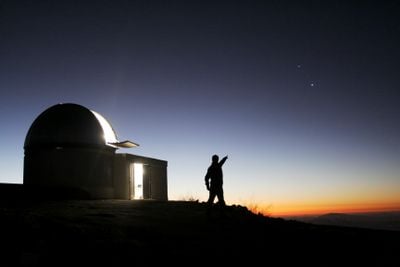
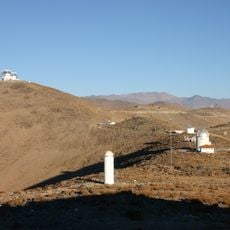
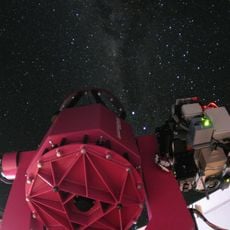
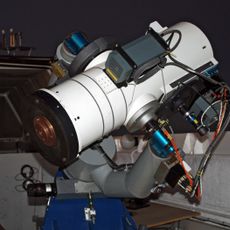
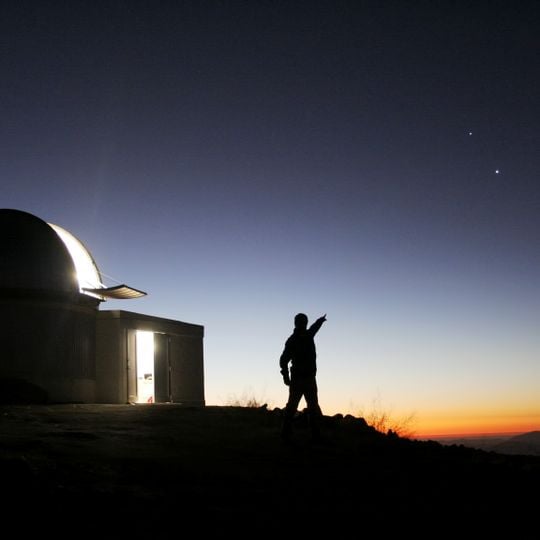
TRAPPIST is a robotic telescope at La Silla Observatory in the Coquimbo Region of Chile. It has a mirror 60 centimeters across and is controlled remotely from the University of Liège in Belgium.
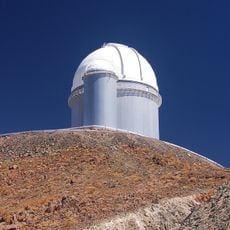
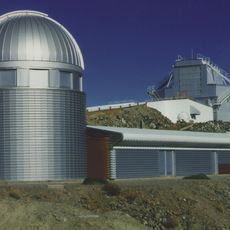
TRAPPIST-South came online at La Silla in 2010, housed in the dome of the retired Swiss T70 telescope, as a joint project of the University of Liège and the Geneva Observatory. In November 2010 it was among the few telescopes to observe the stellar occultation of Eris, which indicated the dwarf planet is smaller than Pluto; it later observed an occultation by Makemake, showing that body lacks a substantial atmosphere. In 2016 Michaël Gillon's team used it to find three Earth-sized planets around the ultracool dwarf star now called TRAPPIST-1, published in Nature; further observations raised the count to seven. TRAPPIST-North began operating at Oukaïmeden, Morocco, in 2016.
TRAPPIST is a backronym for Transiting Planets and Planetesimals Small Telescope, chosen as a nod to Belgian Trappist beer, like the University of Liège's other projects such as SPECULOOS. The name links the telescope to the Trappist monastic order known for its brewing. Visitors at La Silla see the instrument housed in the dome of the retired Swiss T70 telescope.
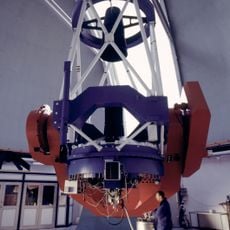
TRAPPIST-South occupies the dome of the retired Swiss T70 telescope at ESO's La Silla Observatory, in the Coquimbo Region of Chile. It is operated remotely from Liège, Belgium, with some functions running autonomously. The 60 cm f/8 Ritchey–Chrétien telescope uses a New Technology Mount NTM-500 and a CCD camera with a 22 x 22 arcminute field of view and a double filter wheel holding 12 filters plus one clear position.
The instrument detected seven Earth-sized planets orbiting a single ultra-cool star – all part of one planetary system. This multi-planet configuration was an unusual astronomical find that surprised the research community.
The community of curious travelers
AroundUs brings together thousands of curated places, local tips, and hidden gems, enriched daily by 92,639 contributors worldwide.