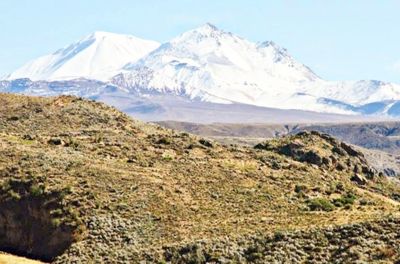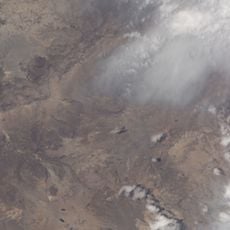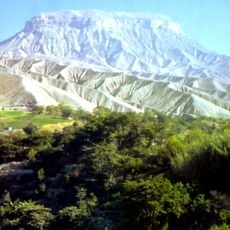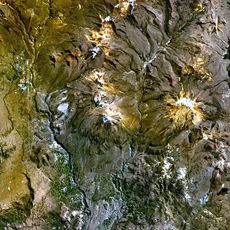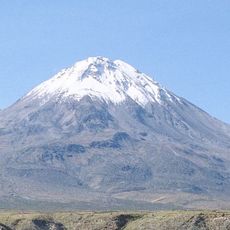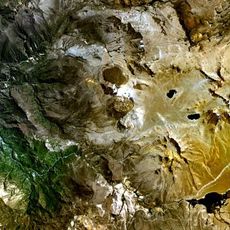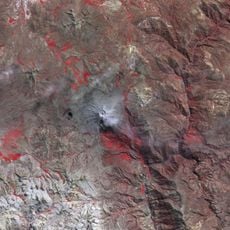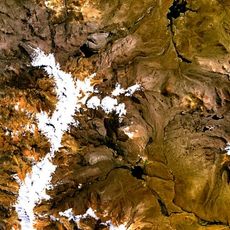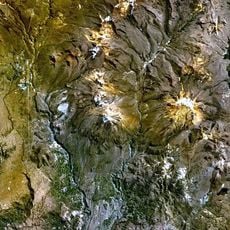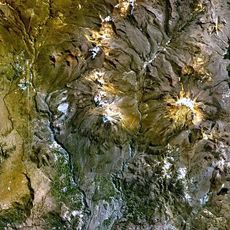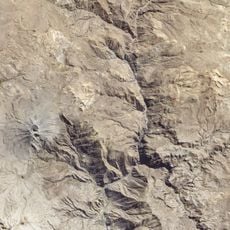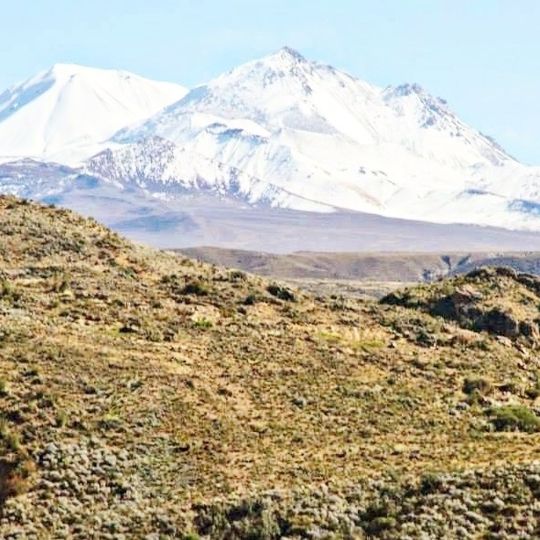
Tutupaca, Stratovolcano in Tacna Region, Peru.
Tutupaca is a stratovolcano in the Tacna Region of southern Peru, made up of three overlapping cones that rise above 18,000 feet (5,800 meters). The cones are built from andesite and dacite rock deposited by lava flows and dome formations over time.
Tutupaca was already active long before its most documented eruption in 1802, which triggered massive debris avalanches and pyroclastic flows that reshaped the mountain's surface. The traces of that event are still visible on the slopes today.
People living in the surrounding villages see Tutupaca as a living presence in their landscape, not just a distant peak. The hot springs near the volcano are visited by some locals who connect them to the rhythms of daily and seasonal life.
The volcano sits at very high elevation, so proper acclimatization over several days is essential before attempting to approach the summit. The drier months between April and December generally offer more stable conditions for the ascent.
Tutupaca has two geothermal zones called Azufre Chico and Azufre Grande, where hot springs and steaming vents emerge directly from the ground on its flanks. This thermal activity shows that the volcano still has active heat sources beneath its surface today.
The community of curious travelers
AroundUs brings together thousands of curated places, local tips, and hidden gems, enriched daily by 91,141 contributors worldwide.