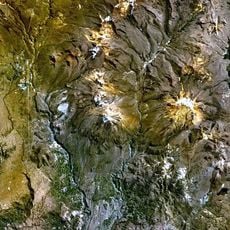
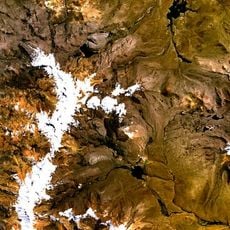
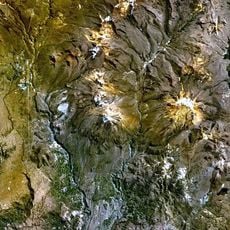
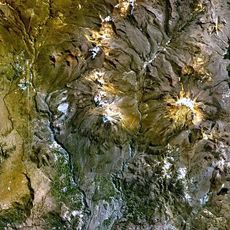
Casiri, Stratovolcano in Tacna Department, Peru.
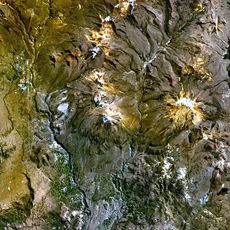
Casiri is a stratovolcano in the Barroso mountain range of the Andes, rising to about 5,650 meters elevation in the Tacna region. The volcanic system consists of multiple structures and shapes the landscape of this remote highland area.
The volcano's last known lava flow occurred roughly 2,600 years ago, marking its most recent volcanic activity in the region. Since then, it has evolved into a stable landmark of the southern Andean landscape.
The mountain carries a name rooted in the Aymara language, reflecting the linguistic traditions of Andean communities. For local inhabitants, this highland landscape remains part of their geographical and cultural identity.
Access to this high-altitude location requires good physical preparation and equipment suited for extreme elevation conditions. The active sulfur mines nearby are not accessible to visitors, but the surrounding landscape offers opportunities to observe volcanic formations.
The volcano features multiple lava domes with flows ranging from about 50 to 500 meters in width, creating visibly distinct geological features. These varying flow widths reflect different eruption phases and make the terrain geologically complex.
The community of curious travelers
AroundUs brings together thousands of curated places, local tips, and hidden gems, enriched daily by 90,754 contributors worldwide.