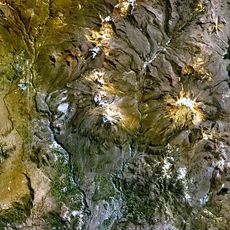
Toquepala Caves, Cave with prehistoric art in Tacna department, Peru.
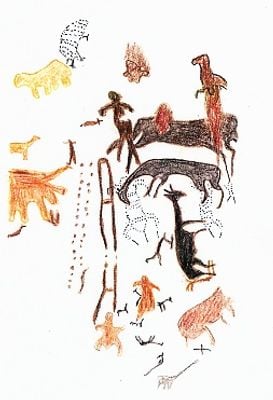
Toquepala Caves sit at 2,200 meters elevation in the western Andes and house a gallery of more than 50 prehistoric rock drawings. The chambers span about 15 meters across and rise up to 5 meters at their tallest point.
The caves were occupied seasonally by hunter-gatherers during the pre-ceramic period, with radiocarbon dates from a 1.8-metre excavation pit placing this around 7650 BC. In 1963 Emilio Gonzáles García scientifically discovered the site, then known as Cueva del Diablo, and the Museo Nacional de Arqueología y Antropología led studies there until 1967 with support from the Southern Peru Copper Corporation.
The paintings show hunters chasing guanacos, wild relatives of llamas that still roam the Andes today. The artists ground local minerals into pigments to create red, yellow and green shades on the rock surface.
The caves lie near the Toquepala mine, at kilometer 103 of the Ilo–Moquegua railway on the northwest flank of the Quebrada Cimarrona, about 154 kilometers from Tacna. A fence erected after earlier vandalism now guards the paintings, so arrange access in advance.
The hunting scenes depict people armed with axes, spears and spear throwers, but bows or arrows never appear in any of the images. This difference suggests that bows may not have been in use in the region at that time.
The community of curious travelers
AroundUs brings together thousands of curated places, local tips, and hidden gems, enriched daily by 94,393 contributors worldwide.