Casa de Pilatos, Colonial building in Historic Centre, Peru
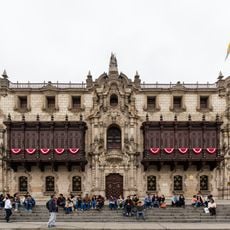
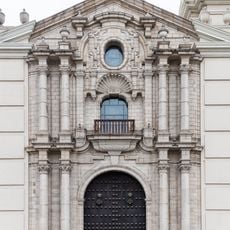
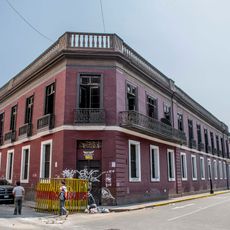
Casa de Pilatos is a colonial building in Lima's Historic Centre distinguished by a remarkable stone doorway that extends the full height of the wall. The interior is divided by an imperial staircase into two main sections, reflecting the formal layout typical of wealthy residences from that era.
Built around 1590, the house was commissioned by a wealthy merchant named Esquivel, and Ricardo Palma claims the Jesuit superior Jerónimo Ruiz de Portillo drew its plans. In 1780 the Marquises of San Lorenzo del Vallehumbroso moved in from Cusco. The Peruvian state bought it during Manuel Prado Ugarteche's second government, and it housed the Casa de la Cultura before the Constitutional Court arrived in 1996.
The name recalls two stories: one links the house to Seville's Casa de Pilatos, the other to Ricardo Palma's tale of Manuel Bautista Pérez, a Portuguese Jewish merchant accused by the Inquisition and burned in 1639. Since 1996 the building has housed the Lima seat of Peru's Constitutional Court.
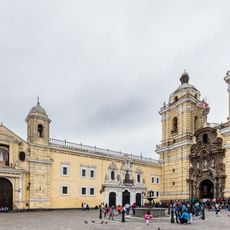
The building is the working seat of Peru's Constitutional Court, so it is not open for tourist visits; the stone doorway, two-section entry hall and imperial staircase are seen from the jirón Áncash, opposite the Basílica de San Francisco. The second floor was rebuilt in the mid-19th century, so the upper level seen today is not the original one.
Ricardo Palma's Tradiciones Peruanas links the name to Manuel Bautista Pérez, a wealthy Portuguese Sephardic merchant who rented rooms here and was nicknamed "Pilatos" after the Inquisition accused him of profane ceremonies with sacred images; he was burned at the stake in 1639.
The community of curious travelers
AroundUs brings together thousands of curated places, local tips, and hidden gems, enriched daily by 93,399 contributors worldwide.