Huaca San Borja, Pre-Columbian archaeological site in San Borja, Lima, Peru.
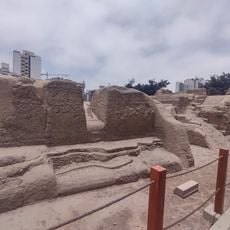
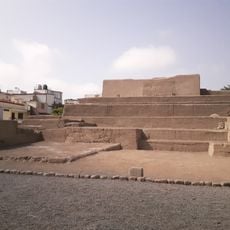
Huaca San Borja is a stepped mud brick pyramid sitting in the middle of the residential district of San Borja, in Lima. The structure is made up of several platforms stacked on top of each other, built from compacted earth and adobe blocks that are still clearly visible today.
Huaca San Borja was built by the Ichma culture, which governed the lower Rímac and Lurín valleys from the religious center of Pachacámac; the site's chronology places it in the Late Intermediate Period, roughly 1100–1500, under the curacazgo of Maranga. The Ichma submitted peacefully, and the Inca incorporated the monument into Tawantinsuyu (1500–1532), where it served as a tambo, a local administrative institution. Spanish treasure hunters destroyed most of the region's huacas; this one and Limatambo survived.
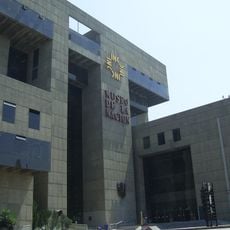
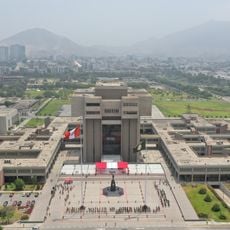
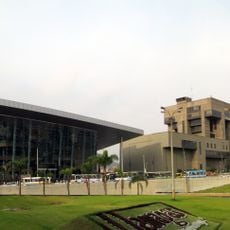
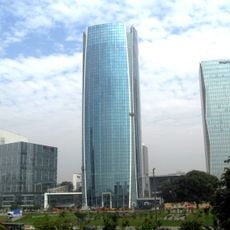
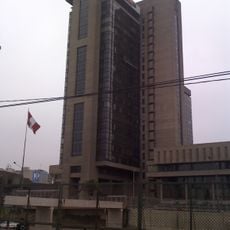
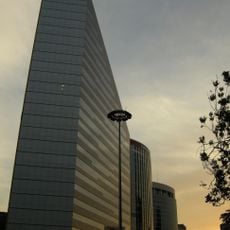
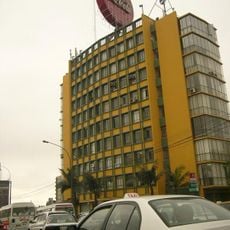
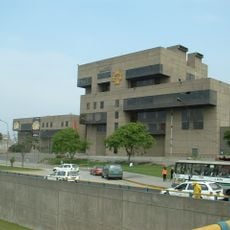
The name "huaca" comes from Quechua and denotes a sacred place or object. The site lies at the corner of Avenida Canadá and Avenida De la Arqueología, beside the Ministry of Education, the Ministry of Culture, the National Theatre and the National Library. It is administered by the Ministry of Culture, which oversees its care and diffusion.
The site is in a residential area and easy to reach on foot from the surrounding streets. A local guide is worth hiring since the structures can be hard to read without context, and guides often know which parts are currently open to visitors.
Each new phase of construction was built directly over the previous one, completely sealing it rather than tearing it down. This means older layers are still intact inside the mound, preserved beneath the surface and not yet fully studied.
The community of curious travelers
AroundUs brings together thousands of curated places, local tips, and hidden gems, enriched daily by 93,302 contributors worldwide.